
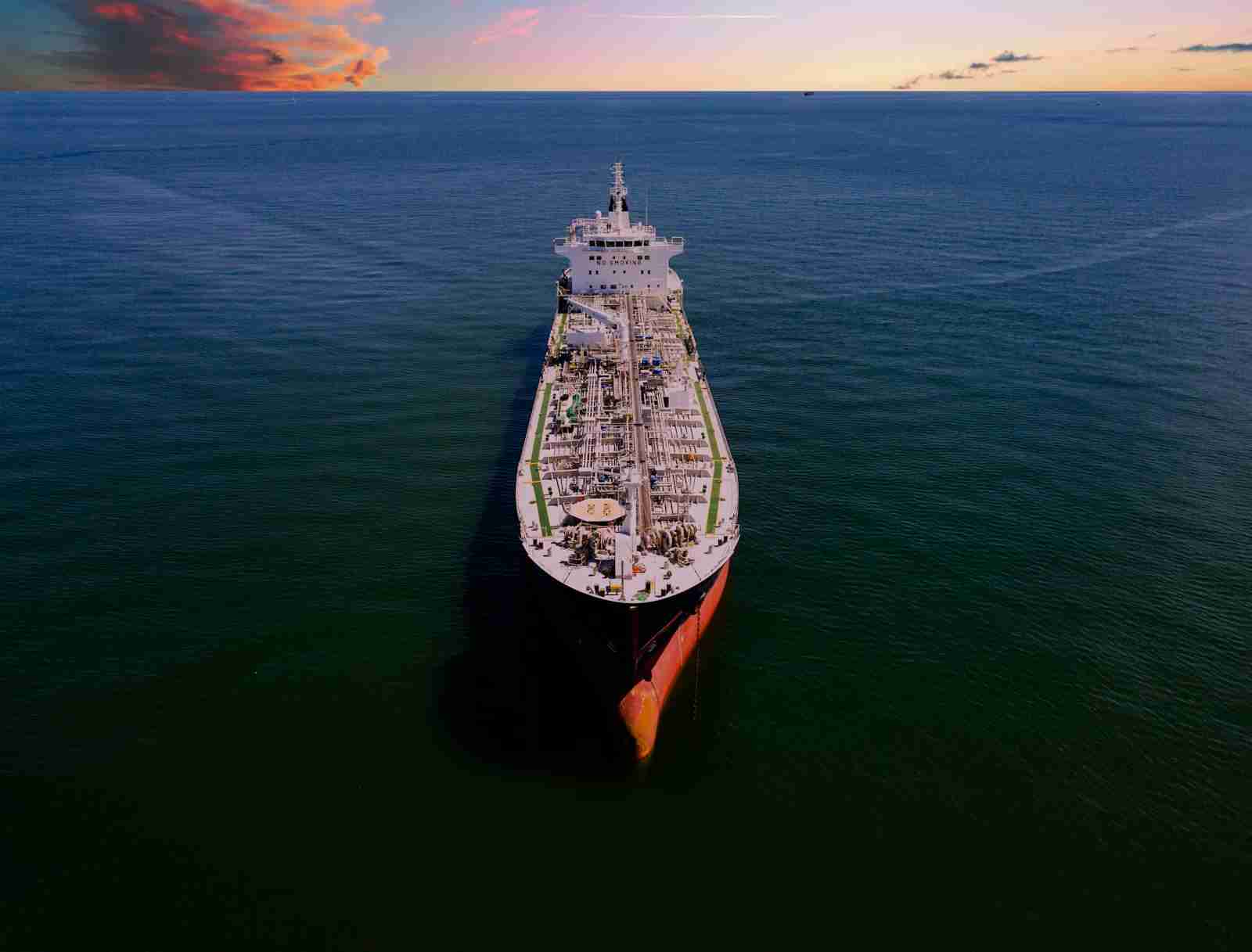
A deep dive into the world’s largest clean oil products exporter, why it is quietly pulling back from the global market, and why New Zealand cannot afford to look away.
By late April 2026, a quiet but profound shift has taken place inside the four refinery complexes that between them supply nearly half of the fuel pumped into New Zealand cars, trucks, buses and aircraft. South Korea, the country the International Energy Agency calls Asia’s top exporter of clean oil products and the world’s largest supplier of jet fuel, is no longer the reliable, high-volume seller it was at the start of the year.

The refineries are still running. The tankers are still leaving the ports of Ulsan, Yeosu and Incheon. But the rules have changed, the cargoes are smaller, the contracts are being rationed and the government in Seoul has quietly taken control of where that fuel goes. For New Zealand, a country that imports every single drop of the refined fuel it uses and buys roughly 48 percent of that fuel from South Korea, this matters more than almost any other story unfolding overseas right now.
This is a long look at what is actually happening inside the South Korean refining sector. Where the crude is coming from now. How long the squeeze is likely to last. When contracted customers like the companies importing fuel into New Zealand might start hearing the word no. And what, realistically, our country can do about any of it.
How South Korea Became Asia’s Petrol Station
Before digging into the crisis, it is worth understanding just how central South Korea has become to the flow of refined fuel across the Asia Pacific, Oceania and the US West Coast.
South Korea is home to four major refining complexes run by SK Energy, GS Caltex, S Oil and HD Hyundai Oil Bank. Three of these four have US or Saudi ownership stakes. Together they process around 2.9 million barrels of crude per day, making South Korea the world’s fourth largest crude importer.
What makes the country distinctive is not just the scale of its refining, but the ratio of output to domestic demand. The complexes produce far more petrol, diesel and jet fuel than South Koreans themselves consume. The surplus is exported, mostly to Australia, Japan, the Philippines, Vietnam, New Zealand, the US West Coast and a clutch of smaller customers. In 2025, South Korean refiners exported 412 million barrels of clean oil products. Their own target for 2026, published in January, was 400 million barrels.
Of particular importance to New Zealand and Australia, South Korea exports an average of 326,000 barrels per day of petrol, 553,000 barrels per day of diesel and 246,000 barrels per day of jet fuel. South Korea accounted for over 82 percent of all jet fuel imports into the US West Coast last year.
This is the world that existed on 27 February 2026.
The Day Everything Changed
On 28 February 2026, the United States and Israel launched coordinated strikes on Iranian military and nuclear targets, including the killing of Supreme Leader Ali Khamenei. Within 72 hours Iran had effectively closed the Strait of Hormuz, the narrow waterway through which roughly 20 percent of the world’s crude and a similar share of global liquefied natural gas passes every single day. The IEA has characterised what followed as “the largest supply disruption in the history of the global oil market”.
For South Korea the maths was brutal. Around 70 percent of its crude imports normally pass through Hormuz. The last tanker carrying Middle Eastern crude to arrive in South Korea docked on 20 March. After that, nothing. The pipeline simply stopped.
Brent crude, which had been trading around US$72 a barrel in mid February, hit US$108.65 on 19 March. The Korean won plunged to a 17 year low against the US dollar on 3 March, with the benchmark Kospi share index recording its worst single session in its 43 year history. Twenty six South Korean flagged vessels were left stranded in the Persian Gulf. The Organisation for Economic Co operation and Development cut South Korea’s 2026 growth forecast by 0.4 percentage points, the steepest downgrade of any major economy.
South Korea on paper holds enough strategic petroleum reserves to cover 208 days of imports, one of the largest stockpiles in the world. But that number is misleading. Calculated against actual refinery throughput rather than net imports, government reserves alone cover only 34 days. Combined with private sector stocks, the real operational buffer was always closer to 67 days. On 12 March, South Korea contributed 22.5 million barrels to a coordinated IEA emergency release, its largest ever single release, dropping government reserves to roughly 26 days of actual consumption.
In the space of about three weeks, South Korea went from being Asia’s confident fuel export powerhouse to a country carefully checking its own reserves.
Where the Crude Is Coming From Now
The response has been remarkable in its scale and speed. On 7 April the Ministry of Trade, Industry and Resources announced it had secured 110 million barrels of alternative crude for April and May deliveries. That volume was sourced from 17 different countries spanning Africa, the Americas, Oceania and two Gulf terminals accessible without transiting Hormuz. The list included Saudi Arabia’s Red Sea port of Yanbu, the UAE’s Fujairah terminal, the Republic of the Congo, Gabon, Canada, Australia, Brazil and the United States.
President Lee Jae myung then dispatched his chief of staff, Kang Hoon sik, as a special presidential envoy with a single objective — lock in crude from anywhere other than the Gulf. By mid April the envoy team reported it had secured a total of 273 million barrels of alternative crude, including roughly 250 million barrels from Saudi Arabia delivered via Yanbu that will be shipped throughout the rest of 2026.
The most surprising supplier to emerge from this scramble has been Canada. The Trans Mountain pipeline, expanded in 2024 to carry Alberta crude to tidewater at Westridge Terminal near Vancouver, has suddenly found itself central to Asian energy security. Korean refiners placed calls to Calgary in March that would have been unthinkable two years earlier. The attraction is simple economics. Canadian Western Canadian Select was landing in Korea at around US$64.65 per barrel in 2025, compared to US$73.64 for American crude and US$73.80 for Saudi. With Middle Eastern barrels now carrying enormous risk premiums, Canadian oil is arriving nearly US$10 a barrel cheaper than its competitors.
Seoul has sweetened the deal further by authorising refiners to swap non Middle Eastern crude they import for government held Middle Eastern reserves. Twenty million barrels are earmarked for these swaps. The government is effectively subsidising diversification away from Hormuz.
But here is the catch. The alternative crude secured for April covered only about 60 percent of normal monthly supply. For May the figure is closer to 70 percent. Even with the full envoy haul of 273 million barrels, South Korea is running its refineries hot on blended feedstocks that were never designed to be run through these particular plants. The crude slate has changed dramatically. For April loading cargoes across Asia, light sweet crude hit a record high share of 21 percent of the mix, up from just 11 percent in February. Middle Eastern grades typically yield about 60 percent middle distillates, which is the diesel and jet fuel that matters most to New Zealand. American West Texas Intermediate yields only about 40 percent. Every barrel of substitute crude produces meaningfully less of the product we actually want.
The Quiet Hoard
Alongside securing alternative crude, the South Korean government has taken a series of steps that amount, in practice, to an orderly hoard.
On 13 March, Seoul imposed wholesale price caps on gasoline and diesel at 1,724 won and 1,713 won per litre respectively, the first such caps in 30 years. This was raised to around 1,934 and 1,923 won on 27 March as global prices continued climbing. The Ministry of Trade, Industry and Resources then went further and told refiners two things. First, they must maintain domestic supply at no less than 90 percent of the same period last year. Second, they can export no more clean oil products than they exported in the same month of the prior year. Refiners cannot now chase higher prices abroad.
On 27 March the government banned naphtha exports outright for five months. Naphtha is the feedstock behind most of the country’s plastics, synthetic fibres, chip packaging and pharmaceutical intermediates. South Korea imports 45 percent of its naphtha, of which 77 percent comes from the Middle East. LG Chem shut one of its naphtha crackers in early April citing feedstock shortages.
Meanwhile actual refinery run rates have fallen. Korean and Japanese refineries are expected to be operating at around 65 percent of capacity in late April and early May, down from normal levels of 70 to 80 percent. Japanese refineries were already running at 68 percent in April. Across Asia, refining throughput in April is on track to be roughly 1 million barrels per day below normal, driven primarily by the crude shortage and the loss of middle distillate yield from the lighter substitute grades.
On top of all of this, jet fuel exports from South Korea have “nearly suspended”, as one industry professor at Inha Technical College put it last week. Korean Air raised its international fuel surcharge to Level 33 for May, the highest in the 10 year history of its current surcharge system, up from Level 18 in April. One way long haul fuel surcharges on Korean Air tickets have jumped more than 80 percent in a month.
South Korean refiners have not formally declared that they will stop honouring existing term contracts. In fact, through March, senior executives at five major Korean refineries told S&P Platts they would “strive to fulfil” their obligations to customers in Asia, Oceania and North America. But the same executives warned that if the disruption continued beyond one to two months, second-quarter term supply contracts could become “rather difficult”.
That warning was issued on 11 March. Two months later is now.
Will There Be a Short Squeeze
The short answer is that we are already in one. The question is whether it gets dramatically worse or slowly eases.
Three factors push towards a deeper squeeze. First, the Strait of Hormuz remains only partially navigable as of 24 April 2026. On 17 April Iran’s foreign minister declared the strait open to commercial traffic for the duration of the Lebanon ceasefire, but Iran reversed this the following day after disputes with the United States over its continuing naval blockade of Iranian ports. Iranian gunboats have fired on tankers attempting to pass. The US Central Command has confirmed 23 ships have been forced to turn back since its blockade began on 13 April. At least 230 loaded oil tankers were reported by ADNOC on 9 April to be waiting inside the Gulf unable to leave. Even if a stable ceasefire holds tomorrow, Rystad Energy estimates it will take until July for oil flows to recover to 90 percent of prewar levels and another two months beyond that for refineries to turn those barrels into finished product.
Second, Asian diesel and jet fuel yields are structurally down because of the crude slate change. A 1 to 2 percent drop in middle distillate yields across Asia’s 30 million barrel per day refining system represents a 250,000 to 500,000 barrel per day loss. Combined with export curbs from China, Thailand and implicit rationing out of South Korea, Rystad estimates the near term reduction in available diesel and jet fuel across Asia could reach 1 million barrels per day.
Third, China’s own fuel export policy remains tight. China banned fuel exports to outside markets in mid March. That removes a major safety valve. Chinese refinery throughput fell from 15.4 million barrels per day in the week before the war to 13.4 million barrels per day in the week to 17 April. Thailand has also banned most refined product exports.
Working against a worsening squeeze is the fact that South Korean, Japanese and Singaporean refiners all have large storage and continue to receive new crude cargoes, just at reduced rates. The IEA has triggered a record 412 million barrel coordinated emergency stock release. And fresh US waivers on Russian oil sanctions have quietly freed up more grades that Indian buyers are now taking, which in turn releases some Saudi Yanbu and African cargoes for Korean use.
Speaking at Parliament on 22 April, Finance Minister Nicola Willis said intelligence showed refineries in South Korea and Singapore had secured alternative crude oil supplies, 1News reported. “Those refineries have moved away from Middle East crude and are increasingly sourcing from West Africa, the United States and Brazil,” she said. Crude volumes going into the refineries that supply New Zealand, she said, were consistent with average levels over the past year. For that reason she declined to formally escalate New Zealand’s Fuel Response Plan out of Phase One.
This is probably the right call for now. But it is a call made on the narrowest of margins.
When New Orders Will Start Being Refused
South Korean refiners and the Ministry of Trade, Industry and Resources have been careful not to say this out loud, but the signals are all there.
Term contracts, which are annual or multi year supply agreements locked in with regular customers, are being honoured. This includes New Zealand’s main fuel importers, who have long standing commercial relationships with Korean refiners going back two decades.
Spot cargoes, which are the one off sales made in addition to contracts, are already being squeezed. Argus Media reported in mid March that South Korean refiners were likely to maintain term exports but would offer “little to no additional volumes on a spot basis”. SK Energy cancelled multiple gasoil sell tenders for April loading out of Ulsan. The Korean government’s export ceiling, which caps exports at prior year volumes, locks this in. Any refiner wanting to sell additional spot cargoes abroad literally cannot.
Naphtha exports have already been outright banned since 27 March. Jet fuel exports have “nearly suspended”, though term contracts remain in place.
The sequence that unfolds from here, if the crisis deepens, is predictable. First, spot cargoes dry up entirely. Second, the government tightens the export ceiling downward, perhaps to 70 or 80 percent of prior year levels. Third, refiners begin negotiating with term customers to reduce contract volumes, invoking force majeure clauses if necessary. Australian, Philippine, Vietnamese and Singaporean state chemical companies have already declared force majeure on various contracts since early March, so the legal path is well trodden.
The most likely trigger for a shift from polite rationing to outright contract breaches would be a second round of serious disruption to Middle Eastern crude flows, either through the strait closing again or through attacks on Saudi infrastructure. Kuwait has already suffered three separate attacks on its Mina al Ahmadi refinery in the space of two weeks in late March. The region remains highly volatile.
Inside South Korean trading rooms the calculation is simpler than it looks. The government has told refiners to prioritise the domestic market and has given them legal cover to do so. Refiners are financially better off complying than fighting. Every barrel sold domestically at the capped price is a barrel the company does not need to buy more expensive replacement crude to produce. The incentives are now aligned with hoarding.
What This Means for New Zealand
The closure of the Marsden Point refinery in 2022 looks, in retrospect, like one of the most consequential strategic decisions in recent New Zealand history. The facility once supplied roughly 70 percent of the country’s refined fuel. Today, every litre of petrol, diesel and jet fuel consumed here arrives on a ship. Around 48 percent comes from South Korea and 33 percent from Singapore. Smaller volumes come from Japan, China and occasionally further afield.
The Ministry of Business, Innovation and Employment has been publishing fuel stock reports twice a week since early March. As of 22 April, New Zealand held 54 days’ cover of petrol, 44.8 days of diesel and 51.4 days of jet fuel, counting stocks both in country and on tankers already heading here. The statutory minimum stockholding obligation is 28 days for petrol, 21 days for diesel and 24 days for jet fuel. On paper, therefore, we have comfortable margins.
But margins evaporate quickly in a serious disruption. In late March, MBIE data briefly suggested diesel cover could fall to 11.3 days around Easter before being revised after additional shipments were confirmed. The Taxpayers’ Union’s FuelClock.nz tracker estimated New Zealand could have run out of diesel by 16 April under business as usual conditions had no additional emergency shipments arrived. That turned out to be too pessimistic, but only because several non trivial interventions worked.
The specific vulnerabilities for New Zealand are three.
First, there is no domestic refining capacity. If South Korean and Singaporean refiners were to significantly cut their export volumes or divert cargoes to higher paying customers, New Zealand has no domestic fallback. The $20 million the government has committed to recommission diesel storage tanks at the old Marsden Point terminal helps buffer stocks but does not add supply. Reopening the refinery itself would cost an estimated $4.9 to $7.3 billion and take at least six years.
Second, New Zealand is at the far end of long shipping lanes that almost all run through or past Asian fuel hubs. If tankers chartered by New Zealand importers are outbid for cargoes by Australian, Philippine or Vietnamese buyers willing to pay premiums, they could be diverted before they ever reach our exclusive economic zone. Maritime intelligence analysts at Vertium and Wood Mackenzie have flagged exactly this scenario as the most serious near term risk, and confirmed that refiners across Singapore, Japan and South Korea are already operating at reduced run rates that tighten supply for everyone.
Third, jet fuel. This is the quietest but in some ways the most concerning part of the story. Air New Zealand has cut roughly 1,100 flights between 16 March and 3 May, impacting around 44,000 passengers. A second round of cuts in early April shaved another 4 percent of the schedule, hitting regional routes such as Nelson and Tauranga between May and June. Air New Zealand chief executive Nikhil Ravishankar said on 22 April that the airline had sufficient jet fuel to operate its current reduced schedule. The reason the schedule is reduced, however, is precisely because supply is tight. South Korea’s near suspension of jet fuel exports and its status as the world’s largest jet fuel supplier makes any recovery in New Zealand aviation directly dependent on what Seoul decides to do.
There are already second order effects flowing through the New Zealand economy. Petrol prices have climbed past $3.40 a litre. Diesel prices have risen by about 90 cents a litre since the war began. The Reserve Bank’s forecast inflation peak now sits at 4.2 percent for the year to June 2026. Government relief of up to $373 million has been targeted through a $50 per week boost to the in work tax credit for roughly 143,000 working families. Castalia modelling prepared for the government suggests a sustained 50 percent reduction in fuel imports would cut GDP by around 1 percent.
a2 Milk shares fell sharply this week after Middle East freight disruption affected the company’s ability to supply infant formula to China, a reminder that the impact extends well beyond the petrol pump.
What Happens Next
There are three scenarios worth watching.
In the best case, the Iran US ceasefire holds, the Strait of Hormuz reopens fully within weeks and Middle Eastern crude begins flowing to South Korea at normal rates. Even in this scenario, Rystad estimates that refined product supply in Asia will not fully normalise until late in the third quarter of 2026. Prices will fall but slowly. New Zealand’s fuel stocks are probably adequate to bridge the gap.
In the middle case, which is arguably where we are now, the strait remains partially navigable with Iranian tolls, US blockade complications and intermittent skirmishes. South Korea continues to source crude from everywhere it can, keeps refineries running at 65 to 70 percent of capacity and maintains export caps at prior year levels. New Zealand term contracts are honoured but spot purchases are expensive and scarce. Pump prices remain elevated. This muddles along through the second and third quarters.
In the worst case, a breakdown in the ceasefire triggers renewed attacks on Saudi, Emirati or Kuwaiti infrastructure, forcing another round of force majeure declarations and outright export bans. South Korea would likely cut its export ceiling below prior year levels, pushing some term customers into renegotiation. New Zealand would probably move into Phase Two or Three of its Fuel Response Plan, which could involve restrictions on non essential fuel use and formal rationing. This is not the current base case but it is the scenario that Finance Minister Willis’s officials are reportedly modelling for the eight to twelve week horizon.
The single most important variable is whether the Strait of Hormuz stabilises. As of today, it has not.
The Bigger Question for New Zealand
Every significant commentator who has examined this crisis, from former energy ministers to think tank analysts at the Asia Media Centre to independent energy writers at Substack publications such as Energy and Resilience, has landed on the same conclusion. New Zealand’s problem is not primarily a South Korea problem. It is a structural vulnerability problem that happens to be currently pointing at South Korea.
The country runs almost entirely on imported liquid fossil fuels for transport. Electricity provides just 0.5 percent of domestic transport energy. The rate of electric vehicle uptake collapsed after the Clean Car Discount was cancelled at the end of 2023, falling from over 50 percent annual growth to under 10 percent. Outside the main centres, public transport is limited. Almost nothing in the modern New Zealand economy functions without diesel in a tank somewhere.
Resources Minister Shane Jones has used the crisis to hammer the previous Labour government’s decision to let Marsden Point close. There is a legitimate argument there, although Marsden Point would not have solved the present problem, since the bottleneck has been crude availability rather than refining capacity. What it might have done is give New Zealand the ability to buy crude directly from non Gulf sources such as Australia or Canada and process it here.
That option is now gone. What remains is a set of difficult choices about how to reduce the country’s exposure next time, because there will be a next time. Options include larger and more geographically diverse strategic petroleum reserves, accelerated electrification of transport, joint offshore storage arrangements with Australia, stronger relationships with non Korean refiners, and perhaps most importantly, an honest public conversation about what a realistic level of energy self sufficiency looks like for a country of five million people at the bottom of the world.
For now, the ships keep coming. The lights are still on. The tanks at Marsden Point and Mount Maunganui and Lyttelton are still being refilled, just, by cargoes dispatched from Ulsan and Yeosu under contracts signed months before the war began.
What these last few weeks have revealed is that the entire arrangement rests on a single assumption. That the Korean government, facing its own voters and its own economy, will continue to judge that it is in its interest to keep exporting fuel to countries like ours. That assumption held through March. It is holding through April, just. Whether it holds through winter, when Korean domestic heating demand peaks and the political calculus gets harder, is the question that matters.
New Zealand’s energy future is currently being decided in Seoul. That sentence would have sounded absurd three years ago. It is the plain truth today.
Update, September 2026. The supply held. The price did not. By mid August diesel had climbed 27 cents a litre off its July low while the official monthly figures still showed it falling.
What’s your view? Should New Zealand be doing more to build domestic fuel resilience, or is diversifying our overseas suppliers a good enough hedge? Share your thoughts in the comments below.
This article was written by AI, briefed to report the facts, hopefully without some of the bias people bring to the job 🙂
Leave a Reply