
A look at the refineries beyond South Korea that keep New Zealand moving — how each is coping with the Hormuz crisis, where the cracks are starting to show, and the unusual trade deal Wellington is about to sign in Singapore.
By late April 2026, most of the conversation about New Zealand’s fuel security has been dominated by a single country. South Korea supplies roughly 48 percent of the refined fuel pumped into our cars, trucks and aircraft, and the squeeze inside its four refining complexes is the most consequential single development in the global oil products market right now. We covered that story in detail in Inside South Korea’s Refinery Crisis and What It Means for the Fuel in Your Tank.

But South Korea is only half the picture. Around 33 percent of New Zealand’s refined fuel arrives from Singapore. Smaller but still strategically important volumes come from Malaysia, Japan and, in normal times, China. These suppliers have responded to the same shock in very different ways, with very different consequences for what arrives at New Plymouth, Mount Maunganui and Lyttelton over the coming months.
This is a long look at those other suppliers. How Singapore became the pivot of the Asia Pacific fuel trade and why its post-Hormuz position is more fragile than its government would like us to believe. Why Malaysia, an oil producing country, has quietly turned into a net fuel importer and what its “sell high, buy low” strategy means for Auckland. What is happening inside Japan’s refineries. Why China’s choice to keep its fuel inside its own borders has changed the calculus for everyone else. And the unusual trade agreement Christopher Luxon is about to sign in Singapore in early May that, in the words of one official, may be “possibly unique in the world”.
Singapore, the Pivot Point of the Asia Pacific Fuel Trade
If South Korea is Asia’s petrol station, Singapore is its trading floor.
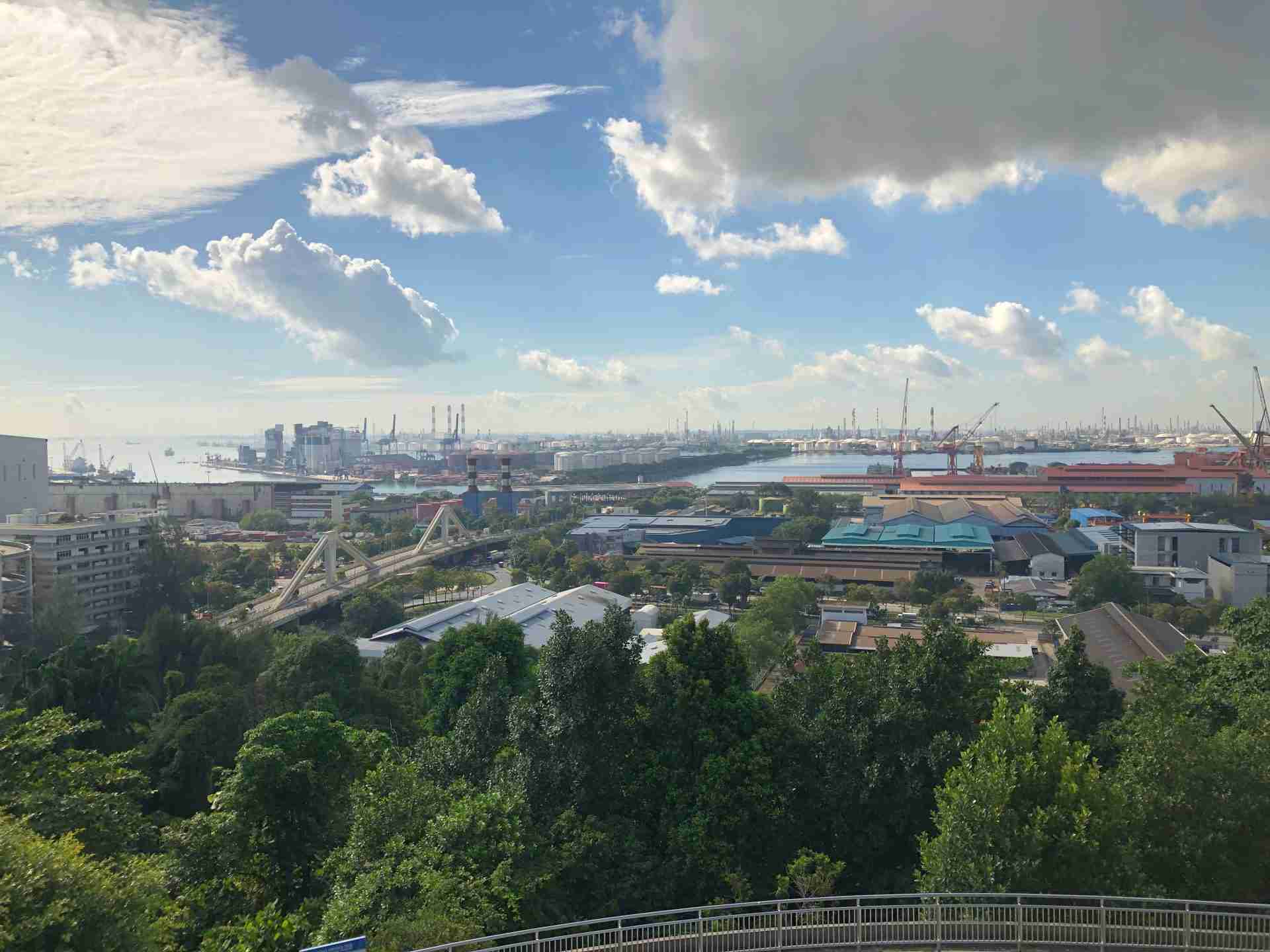
The country has no domestic crude oil production. It has very limited domestic demand. What it has is geography, infrastructure and a refining industry that processes up to 1.5 million barrels of crude per day, almost all of which is then re-exported as petrol, diesel, jet fuel and naphtha to customers across the Asia Pacific, Oceania and beyond. Most of that capacity sits on the 32 square kilometre artificial island of Jurong, where ExxonMobil, Shell and Singapore Refining Company — historically a Chevron-PetroChina joint venture, now consolidated under PetroChina after Chevron’s 2022 exit — operate three of the most sophisticated refining complexes in the world.
Around 2.4 million barrels per day of refined products move through the Port of Singapore. That makes it the world’s third largest oil trading hub after Houston and Rotterdam. For New Zealand, Singapore is a particularly important supplier of jet fuel and high-quality low-sulphur diesel. It is also, crucially, where many of the cargoes nominally listed as coming from elsewhere are actually blended, stored and re-exported.
In normal times, Singapore’s role as a price-setter is more important than its role as a producer. The benchmark prices that New Zealand fuel importers pay are set in Singapore. The Singapore Jet Kerosene swap and the Singapore Gasoil 10ppm contract are the reference points the Australian and New Zealand fuel companies use to negotiate every cargo, regardless of where the physical fuel is actually loaded.
In normal times. These are not normal times.
What Has Actually Happened on Jurong Island
The numbers tell most of the story. ExxonMobil’s Jurong refinery, the largest in Singapore at around 590,000 barrels per day, has cut runs to 50 percent or lower since mid March. Singapore Refining Company has reduced throughput to 60 percent. Shell’s Pulau Bukom complex, which had already been gradually scaled back as part of Shell’s longer term divestment programme, is operating at similar levels.
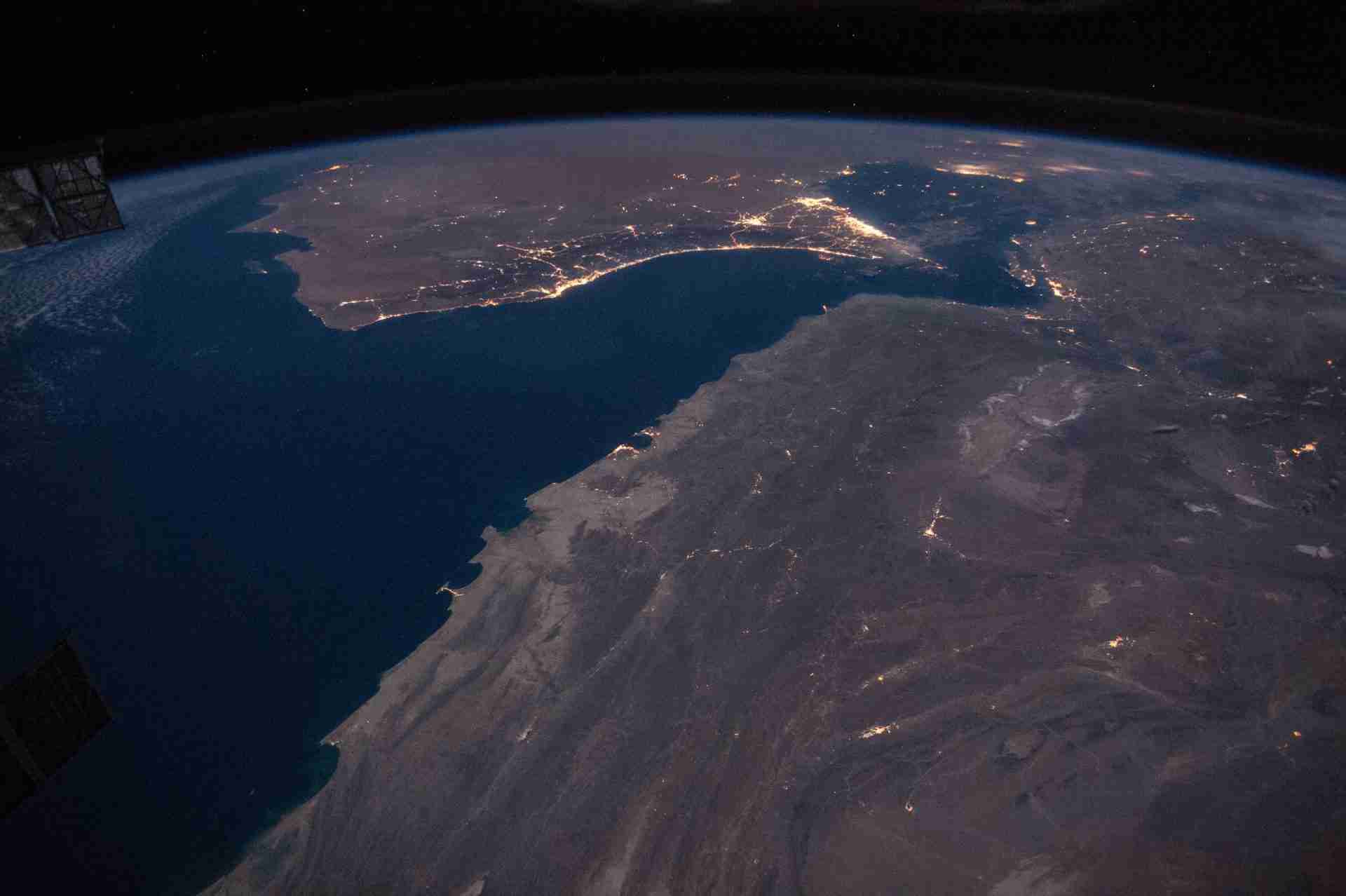
The cause is the same as in South Korea. Approximately 80 percent of Gulf crude normally flowing through the Strait of Hormuz heads to Asian refineries, and Singapore was historically one of the largest customers. With Hormuz throughput collapsing from more than 20 million barrels per day in February to around 3.8 million barrels per day by early April, every Asian refinery has been forced to substitute, ration or simply slow down. Singapore has done all three.
The middle distillate market has reflected this with brutal precision. The Singapore benchmark for jet kerosene and diesel hit all-time highs above US$290 per barrel in March, more than double the levels seen at the start of the year. The jet fuel crack spread, which is the difference between the price of jet fuel and the crude it was made from, peaked at over US$52 per barrel, nearly double the previous record set during the 2022 Ukraine crisis. These are not numbers seen since modern oil futures markets began.
The Singapore government has been considerably more relaxed in public than the South Korean government. Trade and Industry Minister Tan See Leng has emphasised that around half of Singapore’s piped natural gas comes from Malaysia and Indonesia and is unaffected by Hormuz. Singapore has not imposed wholesale price caps. It has not banned exports of any specific refined product. It has, however, drawn down its commercial fuel inventories at an accelerating rate. The reduced refinery runs are themselves a form of rationing, just one expressed through commercial decisions rather than ministerial directives.
Singapore differs from South Korea in one critical respect that matters enormously to New Zealand. It does not have anything like South Korea’s Ministry of Trade, Industry and Resources, willing to impose export caps and direct refiners to prioritise domestic supply. Singapore is structurally an export oriented refiner. Its refineries cannot run at any sensible scale without selling most of their output abroad. The political pressure to hoard exists, but the legal and structural mechanisms to act on it do not exist in the same way.
That has, so far, been good news for New Zealand. Bad news for Singapore’s own commercial fuel buffers.
The Singapore-New Zealand Agreement Almost Nobody Has Heard About
In early May, Christopher Luxon will fly to Singapore. The headlines will be about meetings, photo opportunities, perhaps some commentary on the fuel crisis. The most consequential outcome of the trip, however, will be the formal signing of a bilateral agreement that has been quietly in operation for several weeks.
The agreement is formally titled the Agreement on Trade in Essential Supplies, or ATES. It was concluded between Wellington and Singapore in October 2025 and will be incorporated into the existing New Zealand-Singapore Closer Economic Partnership when Luxon and his counterpart sign it during the May visit. A senior New Zealand official, quoted in Fran O’Sullivan’s reporting in the New Zealand Herald, called it “possibly unique in the world”. It commits New Zealand and Singapore to waive their respective rights, under World Trade Organisation rules and most free trade agreements, to impose export restrictions on each other in a crisis. New Zealand cannot block exports of food, dairy or seafood to Singapore even if domestic shortages occur. Singapore cannot block exports of fuel, medical supplies or other listed critical goods to New Zealand even if its own domestic supply is squeezed.
For Singapore, the calculation makes sense. The country imports almost all of its food. New Zealand is a major and reliable supplier of dairy and protein. If a regional crisis disrupted Singapore’s normal Southeast Asian food sources, the consequences for a city state of nearly six million people would be acute within weeks.
For New Zealand, the calculation is even sharper. Singapore is the only refining centre in the Asia Pacific that has formally agreed not to use export restrictions against New Zealand in any future crisis. South Korea has not made such a commitment, and indeed has already imposed export caps and naphtha bans on the rest of the world, including New Zealand. Malaysia has not made such a commitment. Japan has not made such a commitment. Singapore alone has.
This matters because as the squeeze on Asian refining tightens through the second and third quarters of 2026, the legal protections around term contracts everywhere else are increasingly being stretched. Five force majeure declarations have already been made by Asian refiners against Australian, Philippine, Vietnamese and Singaporean state chemical buyers since early March. The Singapore-New Zealand agreement is, in effect, a hedge against the same thing happening to us. It does not solve the supply problem. It does, very directly, give New Zealand legal certainty that the cargoes leaving Jurong with our name on the manifest will not be diverted by ministerial decree.
That is a much smaller commitment than it sounds, because Singapore’s government does not currently have any plans to make such a decree. But it locks the door on the possibility. In a fuel crisis that has already produced one regional government taking precisely that step, the absence of a similar lock for our other suppliers is a meaningful gap.
Malaysia, the Quiet Supplier With a Complicated Story
Malaysia is the supplier of New Zealand fuel that almost nobody talks about, and that is partly because Malaysia itself has worked hard not to be talked about.
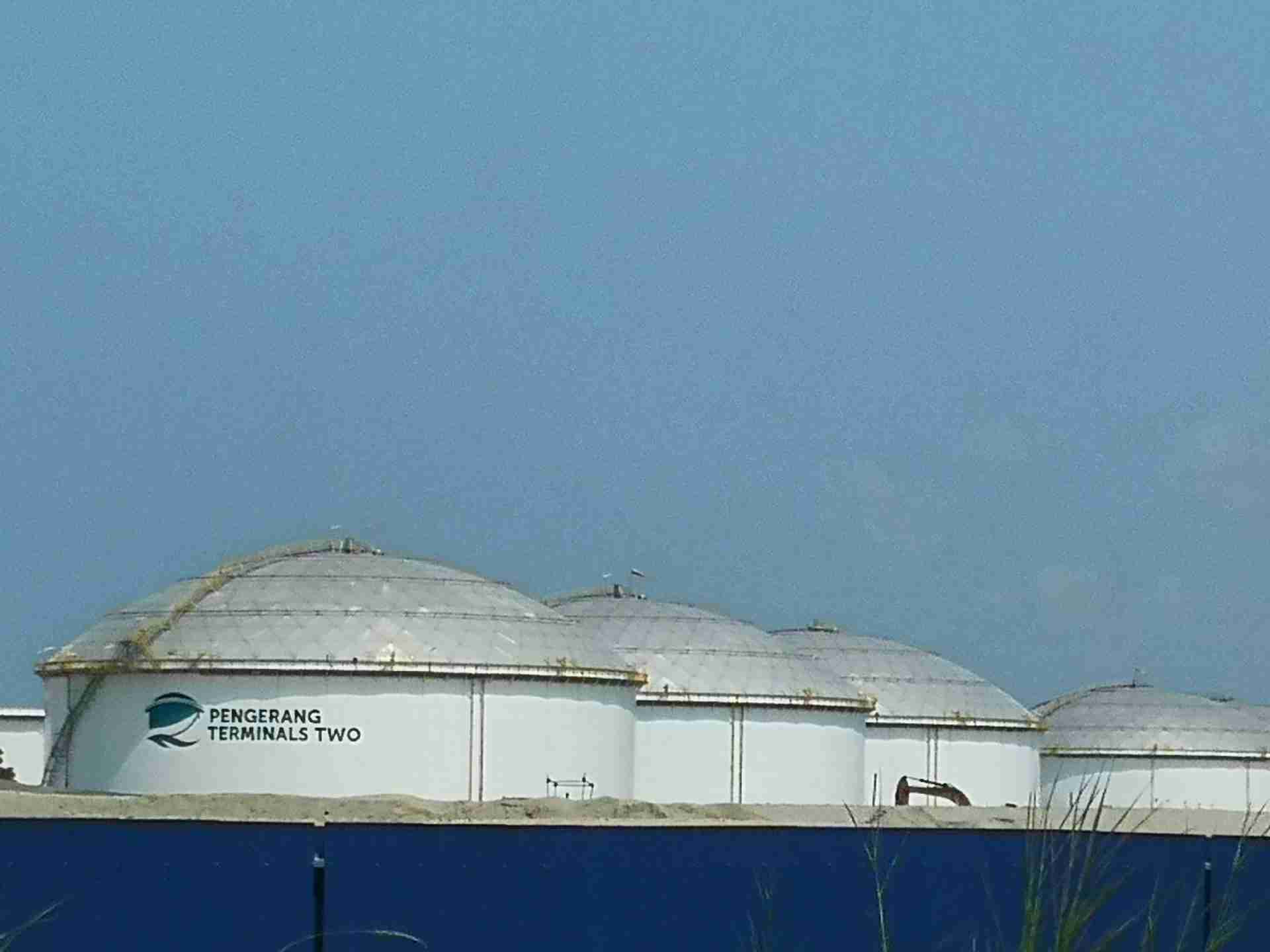
The country has a refining capacity of around 997,000 barrels per day, spread across half a dozen facilities including Petronas’s massive Pengerang Integrated Complex in Johor, the Hengyuan and Petron refineries at Port Dickson, and the Kemaman refinery on the east coast. The crown jewel is Pengerang, a US$27 billion downstream facility commissioned in 2019 that combines a 300,000 barrel per day refinery with one of the largest petrochemical complexes in Southeast Asia.
In the New Zealand context, Malaysia has historically played a smaller direct role than Singapore or South Korea, but its products often arrive in Singapore-flagged or Singapore-blended cargoes that we count as Singaporean. The reality is that the Singapore-Malaysia downstream complex functions as a single integrated system. Crude flows through the Pengerang terminals. Products flow between Pengerang, Jurong and Pulau Bukom. Tankers bound for New Zealand can be loaded at any of these.
What has happened in Malaysia since late February is, in some respects, more interesting than what has happened in Singapore.
Malaysia is itself an oil producing country. It pumps around 350,000 barrels per day of high-quality light sweet crude, exports most of it at premium prices, and then imports cheaper, heavier crude grades, much of it from the Middle East, to feed its own refineries. Malaysian commentators have characterised this as a “sell high, buy low” strategy. It maximises export earnings while keeping domestic petrol cheap, which under the BUDI95 subsidy scheme costs Malaysians 1.99 ringgit per litre, well below market rates.
The strategy worked beautifully when Middle Eastern crude was cheap and abundant. It works much less well when the country’s primary import source is locked behind a closed strait.
Malaysia confirmed in mid March that Petronas was now a net importer of fuel. The company’s tanker Ocean Thunder arrived at Port Klang in March carrying a million barrels of crude from Basra, one of the few cargoes that successfully transited the Strait before passage became unreliable. Petronas has since redirected Malaysian crude away from export markets and into domestic refineries. It has secured additional crude from West Africa and Latin America, which between them now account for over 22 percent of Malaysian imports compared to historical norms in the low single digits. The Pengerang complex has been running blended feedstocks that, like its Korean and Singaporean counterparts, are not optimal for the plants.
What Malaysia has not done is impose formal export restrictions on refined products. Australian Prime Minister Anthony Albanese flew to Kuala Lumpur from 14 to 17 April as part of a Southeast Asian fuel security tour, with Australia understood to have asked Malaysia directly for incremental diesel volumes. The joint communique emphasised the continuity of supply commitments. New Zealand’s importers have continued to take Malaysian-origin and Malaysian-blended cargoes throughout March and April.
But the Malaysian buffer is thinner than it looks. Industry estimates suggest the country holds one to two months of refined product stocks, well below Japan’s eight months and South Korea’s seven months. Singapore relies primarily on commercial storage, as does Malaysia. There is no equivalent of the IEA emergency reserve to draw on. If the crisis deepens, Malaysia is structurally one of the more exposed suppliers in the region, despite producing oil itself.
Japan, the Stockpile Giant That Started Quietly Cutting
Japan does not directly supply much fuel to New Zealand. Its role in this story is indirect but important.
Japan has the largest combined oil stockpile of any IEA member country, at over eight months of equivalent imports. It maintains four major refining complexes, mostly run by ENEOS, Idemitsu Kosan and Cosmo Energy, which between them process around 3 million barrels per day of crude. Japan has historically been a small net exporter of petrol and diesel and a moderate exporter of jet fuel.
Since mid March, Japanese refineries have cut run rates to around 68 percent, with at least one major refiner cancelling March-loading export cargoes of petrol, jet fuel and diesel to prioritise domestic supply. Japan has begun drawing down its strategic petroleum reserves and has accelerated imports of US crude, with May volumes from American sources expected to be roughly four times higher than the same month last year. The first cargoes of West Texas Intermediate landed at Kawasaki and Yokohama in mid April.
The relevance for New Zealand is twofold.
First, Japan’s reduced exports remove a swing supplier from the regional pool. Even when Japan is not selling directly to New Zealand, its presence as a marginal exporter to Australia, the Philippines and Vietnam normally puts a ceiling on prices in those markets. With Japanese exports curtailed, every other Asian refiner’s cargoes are bid up by buyers who would otherwise have taken Japanese product. The squeeze on Singapore and Korean cargoes is partly a Japanese story.
Second, Japan’s behaviour is the closest analogue we have for what a wealthy, well prepared importing country does in this kind of crisis. Tokyo has not banned exports outright. It has not imposed price caps. But it has very deliberately tilted its refining sector toward domestic supply, cancelled some export contracts, and drawn down the world’s largest national stockpile. The implicit message, and one that South Korean officials have privately acknowledged drawing lessons from, is that even a country with Japan’s defensive depth chooses to hoard at the margin when Hormuz closes. Singapore and Malaysia, with shallower buffers, are doing the same thing more quietly.
China, the Withdrawn Customer
China is not really a fuel supplier to New Zealand. It supplies modest volumes of diesel and gasoline to our market in some years, mostly through trading houses, but the volumes are small and inconsistent. The reason China matters in this story is that for the past decade it has been the largest swing exporter of refined products in Asia. When Chinese refiners have surplus production, the entire regional market relaxes. When they hoard, everyone tightens.
China has hoarded.
The National Development and Reform Commission directed Chinese refiners on 11 March to halt new fuel export contracts and to attempt to cancel shipments already committed. Chinese refinery throughput fell from 15.4 million barrels per day in the week before the war to 13.4 million barrels per day in the week to 17 April. China has continued to ship modest emergency volumes to the Philippines, Vietnam, Bangladesh and a handful of other small Southeast Asian buyers, framed by Beijing as an exercise in regional leadership during a crisis caused by the United States. The Philippines received over 260,000 barrels of Chinese diesel in March after declaring a national energy emergency. New Zealand was not on that list.
What China’s withdrawal means for us is straightforward. The single largest source of slack in the Asian refined products market has been removed. Australia, the Philippines, Vietnam and other buyers who would normally take Chinese cargoes are now competing for Korean, Singaporean and Malaysian cargoes instead. Every barrel that does not flow out of Qingdao or Ningbo is a barrel of incremental pressure on Ulsan and Jurong. New Zealand sits at the end of that pressure chain.
What This Looks Like at New Plymouth and Mount Maunganui

The Ministry of Business, Innovation and Employment continues to publish twice-weekly fuel stock updates. As of the latest figures, for the week to Wednesday 22 April, New Zealand held around 51.8 days’ cover of petrol, 41.3 days of diesel and 45.7 days of jet fuel when stocks both onshore and on tankers within the exclusive economic zone are counted together. The statutory minimum is 28 days for petrol, 21 for diesel and 24 for jet fuel.
These margins are not as comfortable as they appear. In late March, MBIE figures briefly showed diesel cover at 11.3 days before being revised after additional shipments were confirmed. The buffer over the statutory minimum has fluctuated by 10 to 15 days on a week to week basis, depending on tanker arrivals. Of the 15 tankers reported by MBIE as currently inbound or in New Zealand waters, six are believed to be loading in Singapore, four in South Korea, three in Malaysia and two in Japan.
Finance Minister Nicola Willis told reporters at Parliament on 22 April that her officials’ assessment was that refineries in South Korea and Singapore had secured alternative crude oil supplies and were moving decisively away from Middle Eastern feedstock toward West Africa, the United States and Brazil. Crude volumes going into the refineries that supply New Zealand, she said, were consistent with average levels over the past year. For that reason she declined to escalate New Zealand’s Fuel Response Plan beyond Phase One.
The judgement is defensible. It is also a judgement made on margins so thin that the difference between Phase One and Phase Two is a single bad week of tanker arrivals.
The Bigger Pattern
What the South Korea piece showed is that the entire Asian refining sector is operating on substituted feedstocks, reduced run rates and quietly tightened export controls. What the Singapore, Malaysia, Japan and China picture adds is that this is not a one country story. Every refiner in the region faces the same crude shortage. Every refiner in the region is running blended feedstocks that yield less middle distillate. Every refiner in the region is choosing, to greater or lesser degrees and through more or less formal mechanisms, to prioritise its own domestic market.
The countries that have the legal and political tools to ration exports are using them. The countries that do not have those tools, like Singapore, are achieving the same effect through reduced refinery runs and the natural price signal. Either way, the volume of refined product available for export to long-distance customers like New Zealand is shrinking.
The single largest variable is not in Singapore, Malaysia or Japan. It remains the Strait of Hormuz. Until commercial traffic resumes at something approaching normal volumes, every refiner in Asia will continue to face the same crude shortage, and the secondary effects on refined product flows to New Zealand will continue to compound.
What New Zealand Can Realistically Do
The Singapore-New Zealand agreement is, in this context, the most useful single piece of policy machinery New Zealand currently has. It does not bring more fuel into the country. What it does is lock in legal certainty around the cargoes already coming. The Australian government has been in active discussions with Singapore, Malaysia and Brunei about something similar but does not yet have an equivalent agreement in place. New Zealand got there first, partly through pre-existing trade depth and partly because the asymmetry of the trade, with our food in exchange for their fuel, gave both governments a reason to commit.
What New Zealand does not have is anything similar with Malaysia, South Korea, Japan or China. Associate Energy Minister Shane Jones, who carries the fuel security portfolio, has said publicly that he is interested in pursuing a Malaysian agreement, and informal discussions have reportedly taken place. South Korea has been a more difficult conversation, partly because Seoul’s own export caps make any reciprocal commitment legally complicated.
Beyond bilateral agreements, the structural weaknesses identified in the Korea piece all still apply. New Zealand has no domestic refining capacity. Reopening Marsden Point would cost between $4.9 and $7.3 billion and take six years. The $20 million committed to recommissioning diesel storage at Marsden Point’s import terminal helps with buffer capacity but adds no production. Strategic petroleum reserves are limited and most of the country’s headline 90-day cover is held as IEA tickets, which are accounting entries rather than physical barrels. Electricity provides 0.5 percent of domestic transport energy. None of this can be changed quickly.
What can be changed quickly is supplier diversification, both at the company level by the major importers and at the diplomatic level by the government. The Singapore agreement is a template. The Malaysian conversation is a logical extension. Japan, with its enormous stockpile and its political relationship with Wellington, is another candidate.
What Happens Next
The base case for the next eight to twelve weeks is more of the same. Term contracts continue to be honoured by Korean, Singaporean, Malaysian and Japanese refiners. Spot cargoes remain expensive and scarce. Pump prices remain elevated. Air New Zealand’s reduced schedule, which has cut roughly 1,100 flights between mid March and early May, is unlikely to fully recover before late in the third quarter. The IEA’s own scenario modelling assumes Middle Eastern oil flows resume by mid year but do not return to pre-war levels even by year end.
The downside case involves a second round of disruption to Gulf infrastructure or a breakdown of the current partial ceasefire. In that scenario, Korean export caps tighten further, Singaporean refinery runs fall below 50 percent, Japanese exports cease entirely and New Zealand probably moves to Phase Two of its Fuel Response Plan. The Singapore agreement becomes more valuable, not less. Malaysian product becomes harder to access. Australian competition for the same cargoes becomes more aggressive.
The upside case requires not just a stable ceasefire but a sustained reopening of Hormuz to commercial traffic at near pre-war volumes. Even then, Rystad Energy estimates it will take until July for crude flows to recover to 90 percent of normal and another two months for refineries to convert those barrels into finished product. Spring fuel prices stay high. Summer fuel prices ease. Winter normalisation looks possible.
The single most important variable is, again, the Strait. Everything else is downstream.
The Quiet Truth
The most useful thing the past two months have revealed is not really about South Korea, or Singapore, or Malaysia, or any other single country. It is about the structure of the system New Zealand sits at the end of.
That system relies on refineries in three or four foreign countries continuing to find it commercially worthwhile to send fuel to a small market 9,000 kilometres away. It relies on shipping lanes remaining open through choke points that are now actively contested. It relies on the goodwill of governments in Seoul, Singapore, Kuala Lumpur and Tokyo, each of whom faces their own voters and their own political calculations about how to balance domestic supply against export commitments.

In normal times, this system works elegantly. The refiners want to sell, the buyers want to buy, the ships sail, the tanks fill. In a crisis, every link in the chain is tested simultaneously. So far, the Singaporean and Malaysian links have held, partly through commercial inertia and partly through the kind of quiet bilateral trust the Singapore-New Zealand agreement formalises.
Whether they continue to hold through winter, when Korean and Japanese domestic heating demand peaks and the political calculus in those countries gets harder, is the question that still matters most.
For now the ships keep coming. They are loading at Jurong, at Pengerang, at Ulsan, at Yeosu, at Kawasaki. They are arriving at Marsden Point, Mount Maunganui, Lyttelton. The system, just, is still functioning.
Whether we have done enough to ensure it continues functioning when the pressure intensifies is a question this country will be answering for years.
For the deeper background on the South Korean refining sector, which supplies nearly half of New Zealand’s fuel, see our earlier piece: Inside South Korea’s Refinery Crisis and What It Means for the Fuel in Your Tank.
What’s your view? Should New Zealand be pursuing similar bilateral fuel agreements with Malaysia and Japan, or is the Singapore deal sufficient? Share your thoughts in the comments below.
This article was written by AI, briefed to report the facts, hopefully without some of the bias people bring to the job 🙂
Leave a Reply