
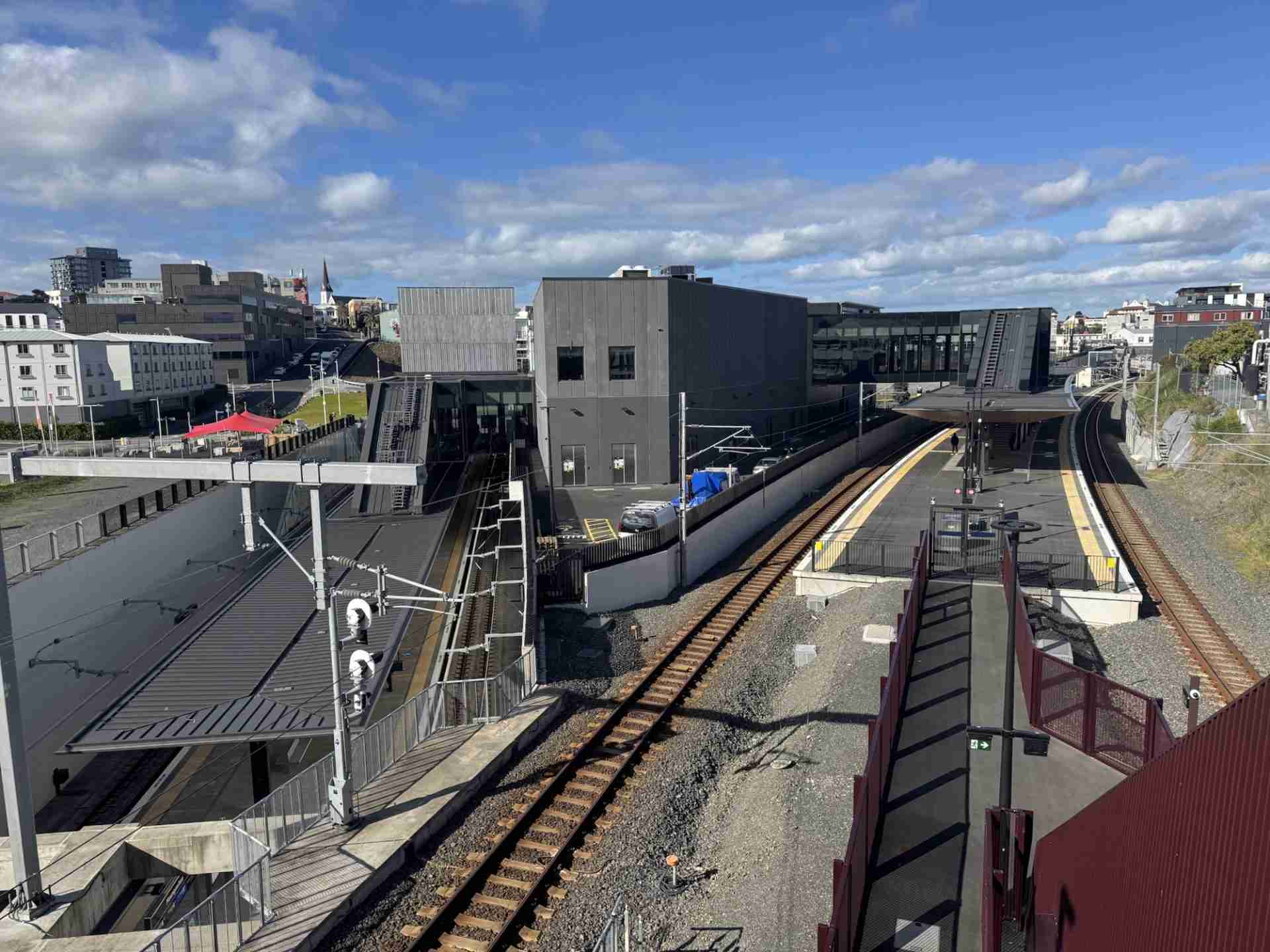
Infrastructure Minister Chris Bishop has committed to a full post-completion review of Auckland’s City Rail Link after the project’s former chief executive said the $5.5 billion scheme could have been delivered for roughly half the cost if early design choices had been different.
Bishop confirmed in a statement to 1News on Thursday that he had asked the Infrastructure Commission to examine the country’s largest ever transport project, including its history, the business cases used to justify it, the costings, and what he called “missed opportunities”. The minister said he had a lot of respect for former chief executive Dr Sean Sweeney and took his views seriously.

The City Rail Link will nearly double Auckland’s rail capacity by linking Britomart through new underground stations at Te Waihorotiu and Karanga-a-Hape and connecting back to the western line at Maungawhau (Mount Eden). Construction work began in 2017 with an initial budget of between $2.8 billion and $3.4 billion. Costs have since climbed to $5.5 billion, an overrun of close to $2 billion against the upper end of the original estimate.
Sweeney, who left the chief executive role in 2024 after six years, told RNZ and other outlets last week that the bill could have come in around $2 billion lower had the network been built around shorter, more frequent trains rather than long nine-car formations. Stations on the new tunnel are 200 metres long to accommodate nine-car trains, even though the existing Auckland fleet currently runs as six-car units. “I now know that nine-car versus three-car probably doubles the cost,” Sweeney said. He pointed to Copenhagen, where the metro runs driverless 24-hour services with 60-metre stations at about a quarter of the cost of the CRL.
The 2019 decision to upsize the design to allow for nine-car trains is one of several factors the Infrastructure Commission is expected to examine. Sweeney also questioned the scale of the underground stations themselves, suggesting smaller and more industrial designs with fewer escalators and no station toilets would have lowered the bill significantly. The current stations include between six and eight escalators each.
Prime Minister Christopher Luxon backed Bishop’s call for a closer look. Speaking to Newstalk ZB, Luxon said New Zealand had “been doing things in a really inefficient way” on big builds and that the country “haven’t moved on” from outdated approaches. Bishop himself said the focus right now was on completing the project and getting it open later this year, with the review designed to draw lessons for future infrastructure rather than slow the final stages of construction.
City Rail Link Ltd chief executive Patrick Brockie welcomed the review. He said independent post-project reviews were an important part of any major infrastructure programme and that CRL Ltd had already been planning a lessons-learned exercise of its own. Brockie has previously attributed the cost increases to the complexity of underground construction in central Auckland, supply chain disruption during the Covid-19 pandemic, and the 2019 design change that future-proofed the network for nine-car trains.
Former Transport Minister Simon Bridges, who as a National minister championed the early stages of the project, was more sanguine. “No big project comes off perfectly, but no one will regret us getting on with building the CRL once it’s open and running,” he told the New Zealand Herald. The Taxpayers’ Union has written to Bishop calling for the inquiry to be made formal, arguing there was “a clear need for accountability when a major infrastructure project overspends its budget”.
Bishop has not yet set a date for the review to report back. The Infrastructure Commission, which sits at arm’s length from ministers, is expected to design the terms of reference itself once the City Rail Link is open and operating. The minister has signalled the inquiry will look beyond the CRL itself to wider questions about how New Zealand scopes, costs and contracts large public works, an issue the government has flagged repeatedly as it tries to reset the country’s infrastructure pipeline.
For Aucklanders the immediate test will be whether the CRL delivers the promised lift in capacity and reliability when services begin running through the new tunnel. The trains, signalling and stations have all been undergoing integration testing in recent months. For taxpayers nationally, the bigger question raised by Sweeney’s comments is how much of the overrun was unavoidable and how much was the price of a series of choices, made early, that may not have been the right ones.
With a general election due later this year, infrastructure cost discipline is shaping up as a defining political theme. Voters who want to compare where the parties stand on transport spending, fiscal responsibility and the future of major projects can use Newswire’s voting tool to see how their views line up with each party’s policies.
What do you think? Was the City Rail Link worth its $5.5 billion price tag, or were the cost overruns avoidable? Share your view in the comments below.
This article was written by AI, briefed to report the facts, hopefully without some of the bias people bring to the job 🙂
Leave a Reply