
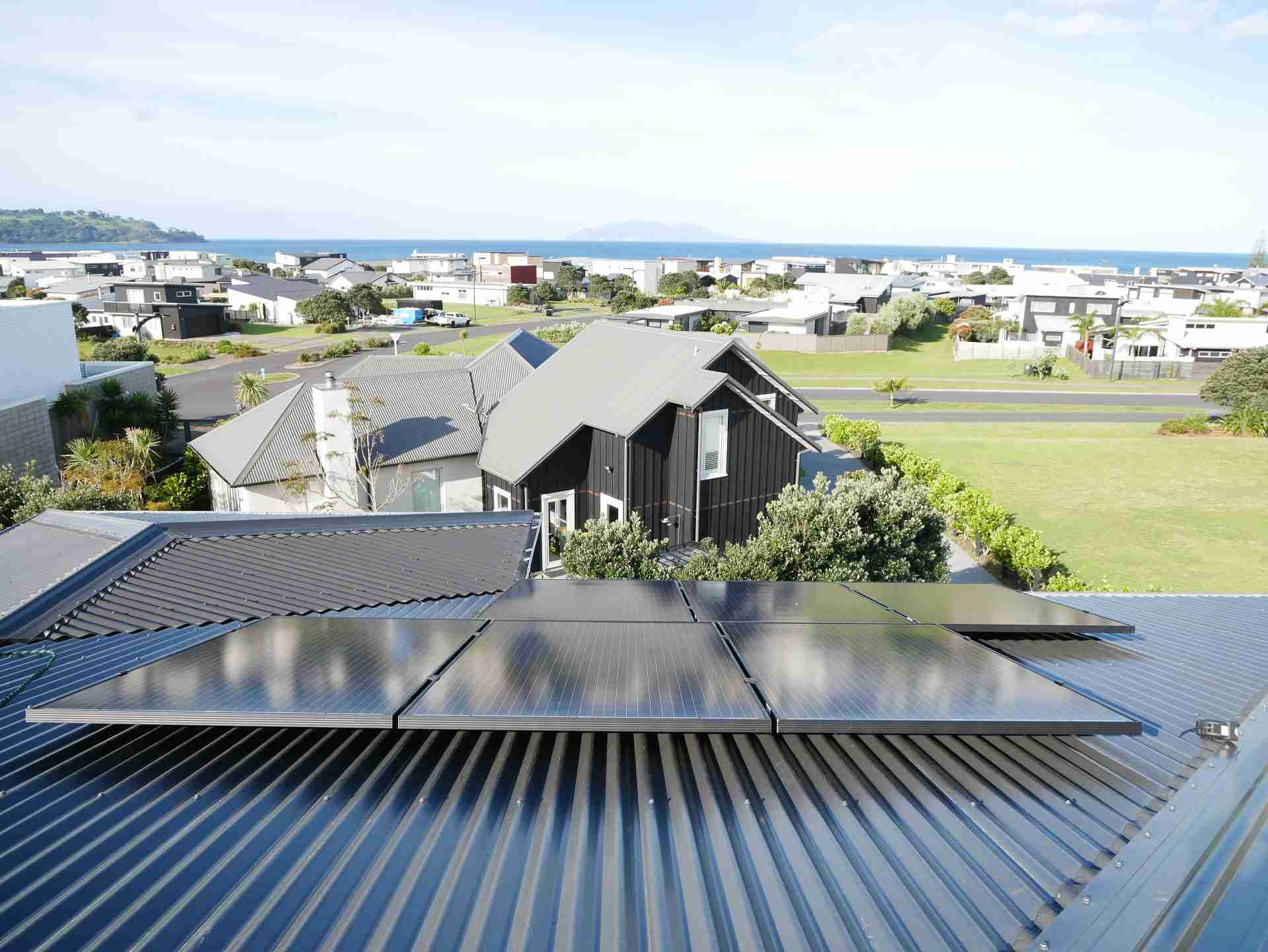
Sometime in May, with no ribbon to cut and no press release, New Zealand slipped past an energy milestone. The solar panels on our houses, sheds, warehouses and paddocks now add up to more than one gigawatt of generating capacity.
Newly updated Electricity Authority figures show 1,020 megawatts of solar installed across 88,412 connections on local power networks at 30 June 2026. On current data the one gigawatt mark was crossed during May, and the moment appears to have passed unremarked.

The count covers every solar system connected through local lines networks, from a small rooftop array to a paddock of panels feeding a rural substation. Solar farms wired straight into the national grid are counted separately and are not in this total. Together the local systems now hold more capacity than Manapouri, the country’s largest hydro station at 850 megawatts. A megawatt of solar produces far less energy over a year than a megawatt of hydro, so solar remains a small share of the electricity we actually use, but the comparison shows how much hardware has quietly gone up.
The last 500 megawatts took 18 months
It took New Zealand more than a decade to build its first 500 megawatts of local solar. The second 500 megawatts took about 18 months.
| Milestone | Month reached |
|---|---|
| 100 MW | May 2019 |
| 250 MW | October 2022 |
| 500 MW | November 2024 |
| 750 MW | September 2025 |
| 1,000 MW | May 2026 |
The pace is still climbing. In the year to June 2026 the country added 369 megawatts of solar, growth of 57 percent, and the number of connections grew by 14,318. Installers registered 13,533 new systems over those 12 months, about 260 every week. Monthly figures are lumpy because one large commercial project can land on the registry as a single big jump, but the direction is unmistakable.
Explore the data. Solar is one slice of a grid that shifts by the minute, and you can watch hydro, wind, gas and the country’s 76 power stations trade places in real time on our live NZ Grid electricity map.
Businesses now hold more solar than homes
New Zealand’s solar story is usually told through house rooftops, but businesses now hold more solar capacity than every home in the country combined.
| Sector | Connections | Installed capacity |
|---|---|---|
| Homes | 80,463 | 456 MW |
| Businesses | 7,949 | 565 MW |
The difference is scale. The average home system is 5.7 kilowatts, while the average business connection is 71 kilowatts, the size of a warehouse or coolstore roof covered in panels.
Not all of it is rooftop solar. At least 98 megawatts of the business total sits in a handful of street-level concentrations consistent with farm-scale installations, including sites near Whitianga, at Huntly and in the Far North. The street-level data hides very small clusters, so the true farm-scale share is probably higher. Even setting those sites aside, businesses hold roughly as much solar as every household combined.
Tasman leads the country on solar uptake
Auckland has more solar connections than anywhere else, 14,877 of them, yet it sits near the bottom of the table on uptake. Panels sit on just 2.4 percent of Auckland homes, ranking the region 14th of 16.
| Rank | Region | Uptake |
|---|---|---|
| 1 | Tasman | 9.1% |
| 2 | Nelson | 7.5% |
| 3 | Marlborough | 7.0% |
| 4 | Northland | 6.7% |
| 5 | Hawke’s Bay | 6.2% |
| 14 | Auckland | 2.4% |
| 16 | West Coast | 1.9% |
The top of the South Island owns the leaderboard. Tasman, Nelson and Marlborough, home to some of the sunniest towns in the country, convert that sunshine at more than double Auckland’s rate. Canterbury runs the second biggest fleet, 13,934 homes at 4.9 percent. The West Coast, with the fewest people and the wettest skies, sits last at 1.9 percent.
One home in every 25 has solar panels
Nationally, 80,463 homes have solar, about one in every 25 residential connections. A decade ago it was about one home in 160.
Batteries are following the panels. At least 19,579 solar connections, around 22 percent, are recorded as having a battery attached, and battery retrofits do not always show up in network records, so the real figure is likely higher.
What could speed solar uptake
New Zealand has never run a nationwide rebate scheme for household solar of the kind Australia operates. Growth here has come the hard way, as panel prices fell and power bills rose.
The Government moved to clear some of the friction in June 2025, announcing a wider permitted voltage range for local networks and building consent changes intended to make installation easier. The consent exemption took effect in October 2025, so most rooftop installations no longer need a building consent.
At the past year’s pace the second gigawatt arrives around 2029, and the pace has been quickening, so it may come sooner. Expect it to pass just as quietly, unless you happen to be watching the data. You can keep watch with us on NZ Right Now, our live dashboard of the country as it happens.
Do you have panels on the roof, or did you price up a system and walk away? Tell us how the numbers worked out for you in the comments below.
Source. Electricity Authority EMI installed distributed generation series to 30 June 2026, solar fuel types, retrieved 25 July 2026, and the EMI solar installations dataset updated 24 July 2026. Uptake is the share of a region’s residential connections with solar. Off-grid systems are not counted. Street-level figures suppress clusters of three or fewer connections. Capacity figures are rounded.
This article was written by AI, briefed to report the facts, hopefully without some of the bias people bring to the job 🙂
Leave a Reply