
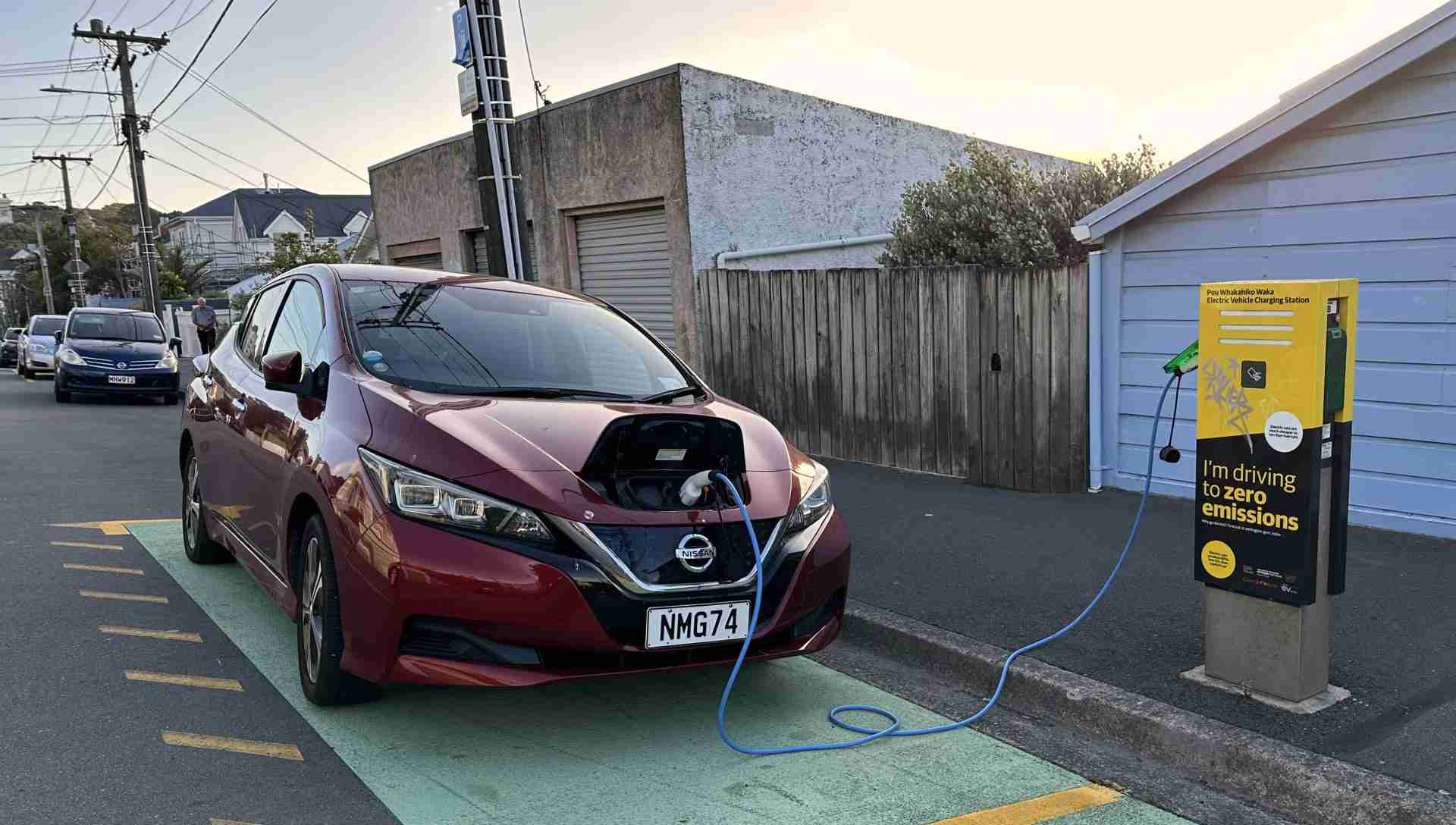
Electric car registrations in New Zealand roughly tripled in the three months to the end of September, as petrol at well over $3 a litre pushed households and businesses toward cars that cost less to run.
The number of electric vehicles registered in the September quarter was up 206 percent on a year earlier, RNZ reported on Friday from figures analysed by Infometrics. Full battery electric registrations rose 230 percent and plug-in hybrids 169 percent. Conventional hybrids, which cannot be plugged in, rose a much more modest 7.7 percent.

Battery electric cars and plug-in hybrids made up 19 percent of all car registrations in the quarter, up from 7 percent a year earlier. Infometrics counted 55,317 passenger car registrations over the three months, up 14 percent year-on-year and above 50,000 for the first time since the end of 2023.
Infometrics principal economist Brad Olsen tied the shift directly to the pump. The price of 91 octane climbed through the quarter from a low of $2.90 a litre to $3.35 by the end of September.
“I think what we’re seeing at the moment is that there’s quite a big focus from both households and businesses on trying to get the most fuel efficient and cost-effective option,” Olsen told RNZ. “Even if they’ve got to pay a bit more upfront for a new EV, it’s still got better running costs over time.”
He said petrol and diesel registrations were continuing to fall as buyers made “a much stronger decision on what car they might be purchasing next.”
“Funnily enough New Zealand consumers are fairly rational,” he said. “When prices go high for fuel people think ‘maybe I’m better off looking at an EV’ and they have.”
That is a sharp turnaround from the slump that followed the end of the clean car discount. Electric and plug-in hybrid sales fell away heavily after the government scrapped the rebate at the end of 2023, and only began to recover this year. Olsen said some observers had wondered whether the early 2026 spike in interest would fade once the first wave of buyers had been through.
“We were wondering, was this sort of just a quick flash in the pan?” he said. “We’re now sort of six months in, and you have seen things continue.”
His explanation is that buyers no longer expect relief at the pump. Households and firms weighing up a vehicle were concluding that “fuel prices do remain high. I don’t necessarily think they’re going to become cheap any time soon,” he said. A wider choice of electric models at different price points was also helping.
Monthly figures released earlier in the week point the same way. New vehicle registrations reached 17,055 in September, up 21.8 percent on September 2025, according to Autotalk’s analysis of NZ Transport Agency data. New passenger registrations rose 27.8 percent to 13,244, although rental fleets did a fair share of the lifting. Rental companies took 4736 of the month’s new passenger cars, or 35.8 percent, and accounted for 41 percent of the year-on-year increase.
Toyota stayed comfortably on top with 3003 passenger registrations, and the Toyota Corolla Cross was the best-selling passenger model with 1053. But the fastest movers were electric brands. BYD registered 871 new passenger vehicles in September, up 714 percent on a year earlier, and Tesla registered 650, up from 228, with the Tesla Model Y the fifth best-selling passenger model on 588. Tesla tends to bunch its deliveries at the end of each quarter, so its monthly numbers jump around.
Counting its commercial models as well, BYD said it registered 1090 vehicles in September, the first time it has passed 1000 in a month in New Zealand, AutoTrader reported. The Chinese company, which entered the New Zealand market in 2022, said its Atto 2 was its best seller for the month, and it has just added a plug-in hybrid version of that car priced from $34,990.
“This represents real buyers choosing lower running costs, better technology and strong value, not a number built on subsidies or fleet deals,” BYD Auto NZ general manager Warren Willmot said.
Six Chinese brands between them took 20.3 percent of the new passenger market in September, up from about a tenth a year earlier. A month ago Chinese brands had taken almost a fifth of August registrations, so their share is holding rather than spiking.
For the wider economy the shift matters in two ways. Every car that runs on New Zealand electricity rather than imported petrol trims the national fuel bill, at a time when the country is paying more for oil and has little buffer if supply is disrupted. It also changes the second-hand market a few years out. Rental and new-car fleets bought now become the used cars of 2028 and 2029, which is how ordinary buyers who never purchase new eventually get access to cheaper electric motoring.
There are limits to the trend. Electric and plug-in cars are still fewer than one in five registrations, and New Zealand’s existing fleet of several million cars, vans and utes turns over slowly. Petrol and diesel cars will make up most of what is on the road for years yet, which is why pump prices remain one of the biggest pressures on household budgets. Readers can follow how those prices are moving week to week on our New Zealand fuel price tracker.
Whether the surge lasts will depend largely on oil. If petrol eases back below $3 a litre the case for paying more up front for an electric car weakens. If it stays where it is, Olsen’s view is that buyers will keep doing the sums and keep reaching the same answer.
Have petrol prices changed what you would buy for your next car, or have you already made the switch? Tell us how the numbers stacked up for you in the comments below.
This article was written by AI, briefed to report the facts, hopefully without some of the bias people bring to the job 🙂
Leave a Reply