
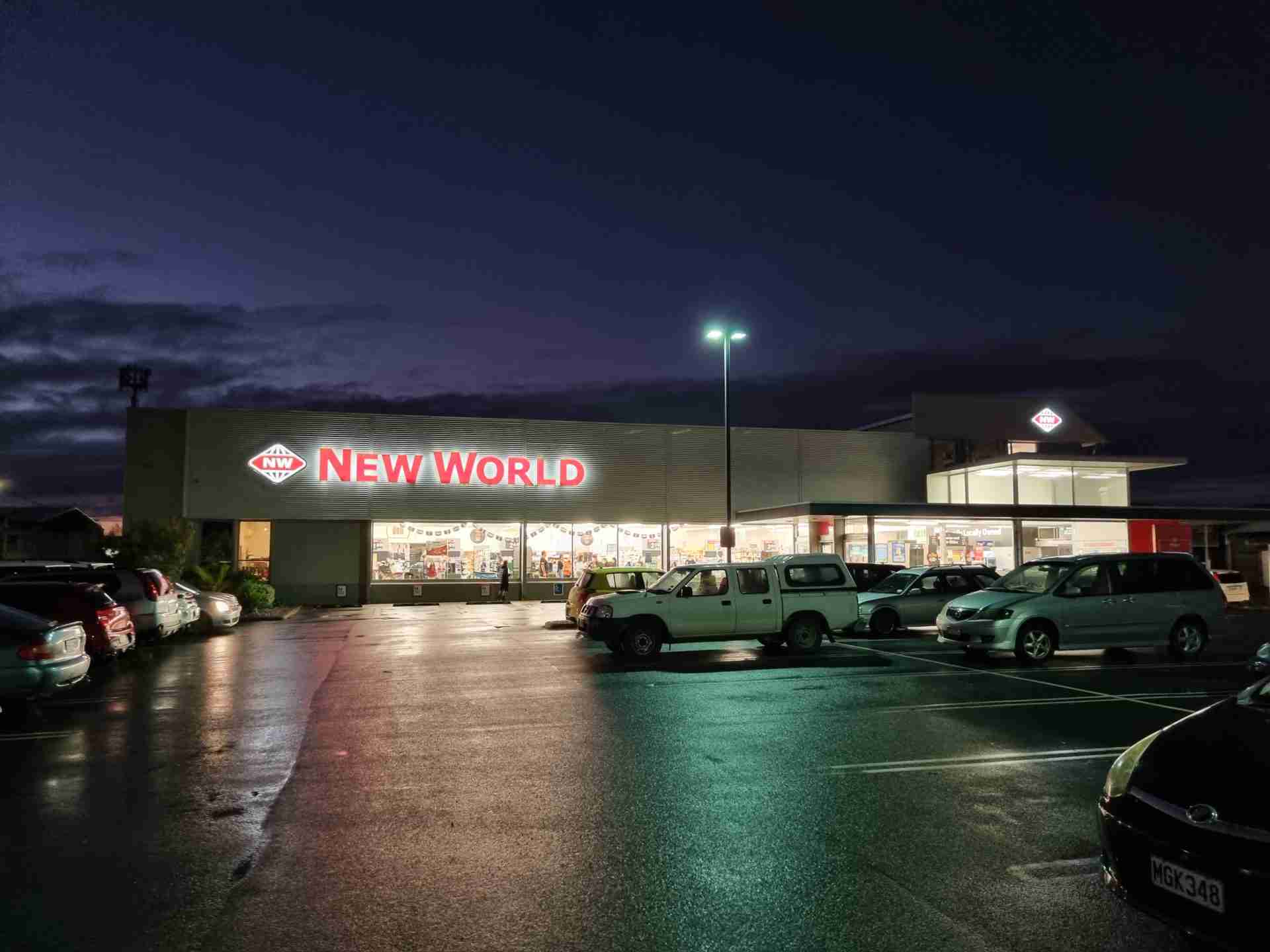
Foodstuffs has hit back at plans to split Pak’nSave from New World, releasing a review by Sydney-based economics consultancy HoustonKemp that says the modelling behind the break-up would only work if New Zealand’s supermarkets ran at a loss for the next 20 years.
The review, dated 30 September and made public on Thursday 1 October, takes aim at the cost-benefit analysis that consultancy Sense Partners wrote for the Ministry of Business, Innovation and Employment. That analysis is the centrepiece of National’s election promise to break up the grocery co-operative, which Newswire reported when it was announced on 16 September.

The Sense Partners report estimated that grocery prices would be about 3.5 per cent lower on average in the first year after a separation, with the gains growing as the new chains settled in. It put the net gain to the whole economy at $2.9 billion over 20 years, and the benefit to an individual household by 2035 at between $200 and $1320 a year, depending on income and family type.
HoustonKemp founding partner Greg Houston and his colleague Michael Calvert were asked by Foodstuffs North Island and Foodstuffs South Island to peer review that work. Their answer is blunt. They describe the results as appearing “too good to be true” and conclude that “Sense Partners’ findings risk drawing policy makers towards an economic mirage.”
The heart of their argument is a piece of arithmetic about profit. Working back from the published results, HoustonKemp calculates that the Sense Partners model implies retail prices about 4.9 per cent lower over the long run, while the cost of goods, including what supermarkets pay their suppliers, rises by 1 per cent. That combination, the review says, would cut supermarket profits by the equivalent of 3.5 per cent of sales.
The trouble, according to HoustonKemp, is that the big three grocers do not earn that much in the first place. Using figures from the Commerce Commission’s annual grocery reports, it puts the weighted average net profit margin of Foodstuffs North Island, Foodstuffs South Island and Woolworths New Zealand over the past four years at about 2.3 per cent of sales once GST is taken into account. Woolworths New Zealand recorded a small loss in each of the last two years covered.
Take 3.5 cents of profit out of every dollar from an industry that makes 2.3 cents, and the sector ends up losing money. “No sector of the economy can sustain ongoing negative profits. How then could Sense Partners derive such a result?” the review asks. In HoustonKemp’s own breakdown of a $1 shelf price, net profit goes from about 2.3 cents today to a loss of about 1.2 cents under the modelled outcome.
The review also points to the Sense Partners report’s own caveats. It quotes the consultancy as saying it has “no view on what an optimal level of margin is in this market, even in ballpark terms,” and that its assumption the new businesses would stay commercially viable “may be a strong assumption.” HoustonKemp says that doubt “should have caused Sense Partners to reconsider the plausibility of its results.”
Its second line of attack goes to how competition works inside Foodstuffs today. The Sense Partners model, the review says, treats Foodstuffs stores and brands as if none of them currently competes with another, so that splitting them creates a large burst of new rivalry. HoustonKemp rejects that. “There is no basis for this assumption. Foodstuffs stores are individually owned with a strong incentive to compete. Pak’nSave stores can and do presently win business from New World (and Woolworths) stores, and vice versa.”
It also questions the choice of tool. The engine of the Sense Partners work is a merger simulation model, the kind competition regulators use to predict how much prices will rise when two rivals combine. HoustonKemp argues that running such a model in reverse ignores the extra costs of breaking a business apart, such as duplicated supply chains, and that the 1 per cent cost increase assumed by Sense Partners was “untested with industry participants.” Sense Partners itself showed how sensitive its result is to that figure. According to Inside Retail, the report found a 2 per cent rise in supply chain costs would shrink the consumer benefit to about $920 million, and larger increases could wipe out the net benefit altogether.
HoustonKemp concedes its own work has limits. Because the ministry released only the results and methodology, not the full model, the review describes itself as preliminary and “confined to what can be gleaned from the numbers as reported.” It is also a document paid for by the company that would be broken up.
The Sense Partners analysis has already been checked by others. Former UK Competition Commission chief economist John Davies peer reviewed it for the government and called it an “impressive” piece of work. “As with any economic modelling, a lot of assumptions and simplifications of reality are required. In general, the modelling choices and assumptions made seem to me sensible and similar to those made when competition authorities model mergers,” Davies wrote, as reported by RNZ.
National’s finance and economic growth spokesperson Nicola Willis, who commissioned two peer reviews of the work as finance minister, pointed to Davies and to the research institute Motu, which also reviewed it. “But economists can always have different views,” she said in a response reported by RNZ. Her answer to the disagreement is the process National has already promised. The party would direct the Commerce Commission to run a six-month review of whether separating Pak’nSave from New World and Four Square would leave shoppers better off, and would only legislate for the split if the regulator found it would.
That means the argument HoustonKemp has started is likely to be settled, if National is returned, inside the regulator rather than on the campaign trail. It is also not the only supermarket fix on offer before the 7 November election. New Zealand First wants to split Pak’nSave from New World without waiting for a Commerce Commission review. Labour would force Foodstuffs and Woolworths to run their wholesale arms independently of their retail stores, and has promised a law against excessive prices. The Greens want to force the two grocers to sell stores to create a state-owned chain, while ACT is avoiding structural separation and wants a one-stop shop for new supermarket consents.
For shoppers, the dispute comes down to whether the promised savings are real. The Commerce Commission’s 2022 market study found competition in the grocery sector was not working well for consumers, and every major party now accepts something has to change. What HoustonKemp has done is put a sharp question at the centre of National’s version. If supermarket margins are already as thin as the regulator’s own figures suggest, where would a 4.9 per cent price cut come from without driving the new chains into the red?
Do you think splitting Pak’nSave from New World would bring down your grocery bill, or is the modelling too good to be true? Tell us in the comments below.
This article was written by AI, briefed to report the facts, hopefully without some of the bias people bring to the job 🙂
Leave a Reply