
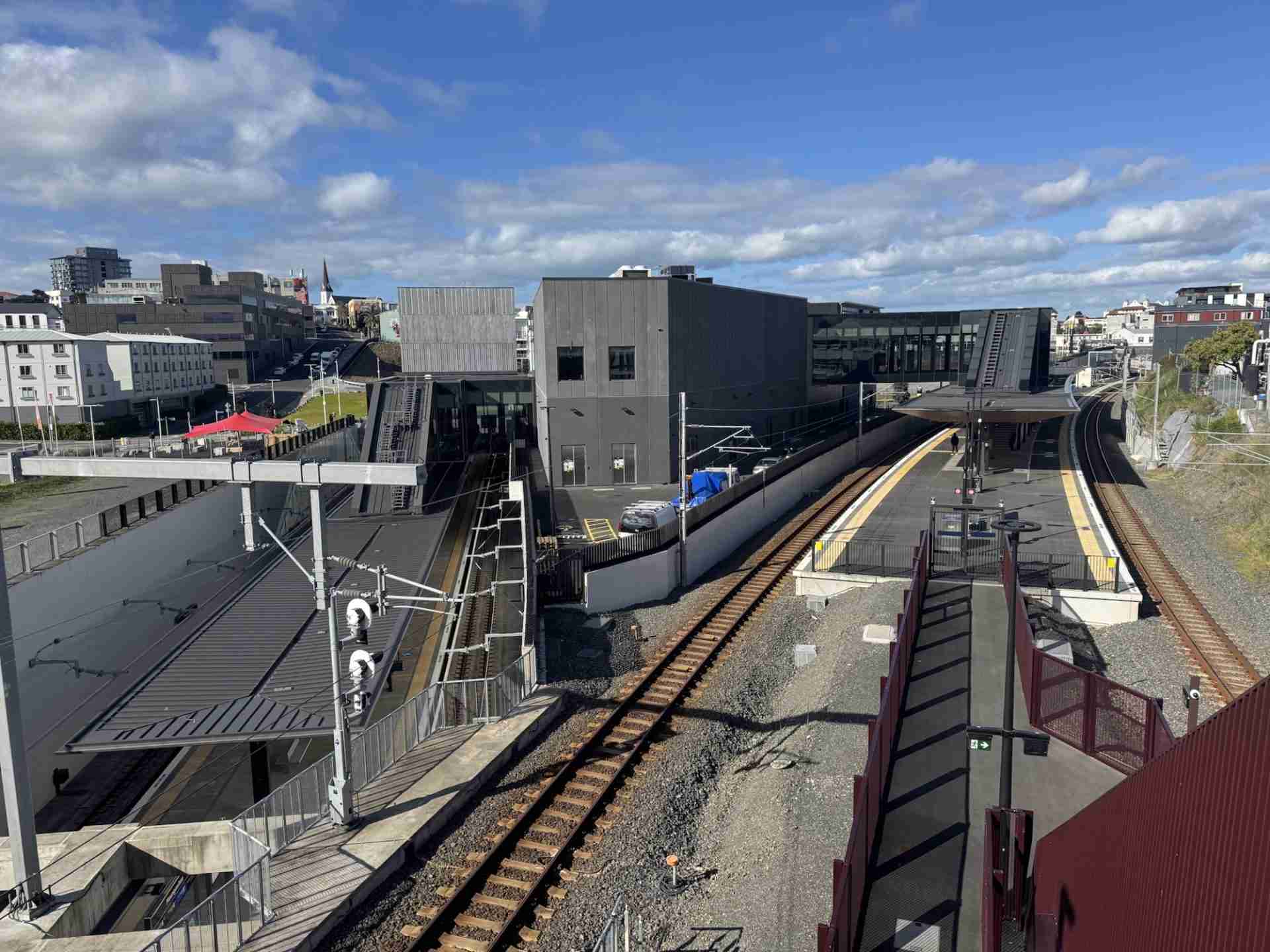
KiwiRail has posted a net loss of $1.41 billion for the year to 30 June 2026, more than three times the previous year’s $422 million deficit, after writing almost $1.2 billion off the value of Auckland’s City Rail Link in the same year it took ownership of the tunnels.
Strip out the accounting charges and the state-owned rail company had its best year in some time. The operating surplus, which measures what KiwiRail earns from customers against the cost of running trains, ferries and the network, rose 45 per cent to $162 million, just ahead of the $160 million target the company had published, KiwiRail said on Wednesday.

Operating revenue climbed 5.1 per cent to $1.12 billion while operating costs rose less than half a per cent, to $959 million. Freight revenue grew 11 per cent to $504.4 million on roughly 3 per cent more volume, with trains moving around 3.5 billion net tonne kilometres of cargo over the year.
Chair Suzanne Tindal said the results were encouraging. “They reflect daily decisions being made by many people across the organisation and in the field to do things better than they did last year.”
The headline loss comes from how KiwiRail is required to value what it owns. The City Rail Link assets were handed over by City Rail Link Limited under an asset transfer agreement signed on 30 June 2026, the final day of the financial year, at a transfer value of $1.19 billion. The Crown paid for them by taking up almost 1.2 billion new KiwiRail shares, according to the company’s 2026 integrated report.
Accounting standards then required KiwiRail to value those assets on the commercial cash they are expected to earn for KiwiRail itself, not on what they cost to build or on the wider benefit to Auckland. Because the commercial returns are far lower than the construction cost, almost the entire transferred value, $1.192 billion, was written off in one go. The report says the City Rail Link will still provide significant transport, economic and social benefits, but those do not show up in a commercial valuation.
That was not the only write-down. The annual review of rail, ferry and related assets produced a further $556 million impairment, which the company says reflects lower expected commercial cash flows rather than any decline in the condition of the assets. Another $198 million came off the value of investment property, mostly land tied to the Drury station development in south Auckland, where new stations opened in August. Together the impairments totalled $1.75 billion, up from $947 million the year before.
KiwiRail stressed that none of this touches its cash. The integrated report says the valuation movements have no effect on the company’s cash position, liquidity, funding arrangements or day-to-day operations. Cash generated from operations rose 72 per cent to $177 million, and shareholder equity actually increased by $490 million to $2.35 billion because the new shares issued for the City Rail Link and other Crown funding outweighed the loss.
Large write-downs are not new for KiwiRail, which booked $947 million of impairments the year before. The rail network is largely funded by the Crown because of its public value, but the company’s balance sheet can only count what KiwiRail itself can earn from those assets. The company said the impairment “should not be interpreted as a measure of the commercial performance of KiwiRail’s services businesses.”
Other lines in the accounts swung sharply. Capital grants fell 49 per cent to $306 million, while insurance proceeds rose to $209 million from $53 million. KiwiRail will not pay a dividend, in line with its statement of corporate intent.
The operating side also showed better reliability. Freight delivered in full and on time rose 3 percentage points to 90 per cent across all sectors, and Interislander reliability held at 99 per cent excluding weather, in the first full year of operating a two-ship fleet. KiwiRail spent $1.15 billion on capital projects, including new DM locomotives for the South Island, seven of which are now in service with six more being commissioned, and 1000 new wagons assembled at the Hillside workshops in Dunedin.
Safety numbers improved too. High potential safety incidents fell 52 per cent to 43, and total recordable injuries dropped 12 per cent to 214. Chief executive Peter Reidy said “safety remains our highest priority, and fundamental to everything KiwiRail does.” He added, “Getting our people home safe is not a target we balance against others. It is the outcome of everything else.”
Much of the year’s operational effort went into getting Auckland’s metro network ready for the City Rail Link, which opened to passengers on 13 September, after the end of the financial year. For readers who want the engineering story behind the tunnels, our illustrated guide to what lies beneath the City Rail Link walks through the route station by station.
Tindal said KiwiRail moves around a quarter of the country’s export freight, carries more than 24 million metro passenger journeys a year and contributes an estimated $3.3 billion of value to New Zealand annually. The company also confirmed it will run the two new rail-enabled Cook Strait ferries being delivered by Ferry Holdings, and is working with ports and other partners on the infrastructure for them.
Looking ahead, Tindal said, “FY27 will be about converting momentum into sustained growth, stronger customer outcomes, improved productivity and the delivery of long-term value for New Zealand.”
RNZ reported that Rail Minister Winston Peters welcomed the result and congratulated rail workers.
Should a public asset like the City Rail Link be judged on what it earns for KiwiRail, or on what it does for Auckland? Tell us what you think in the comments below.
This article was written by AI, briefed to report the facts, hopefully without some of the bias people bring to the job 🙂
Leave a Reply