
Opinion
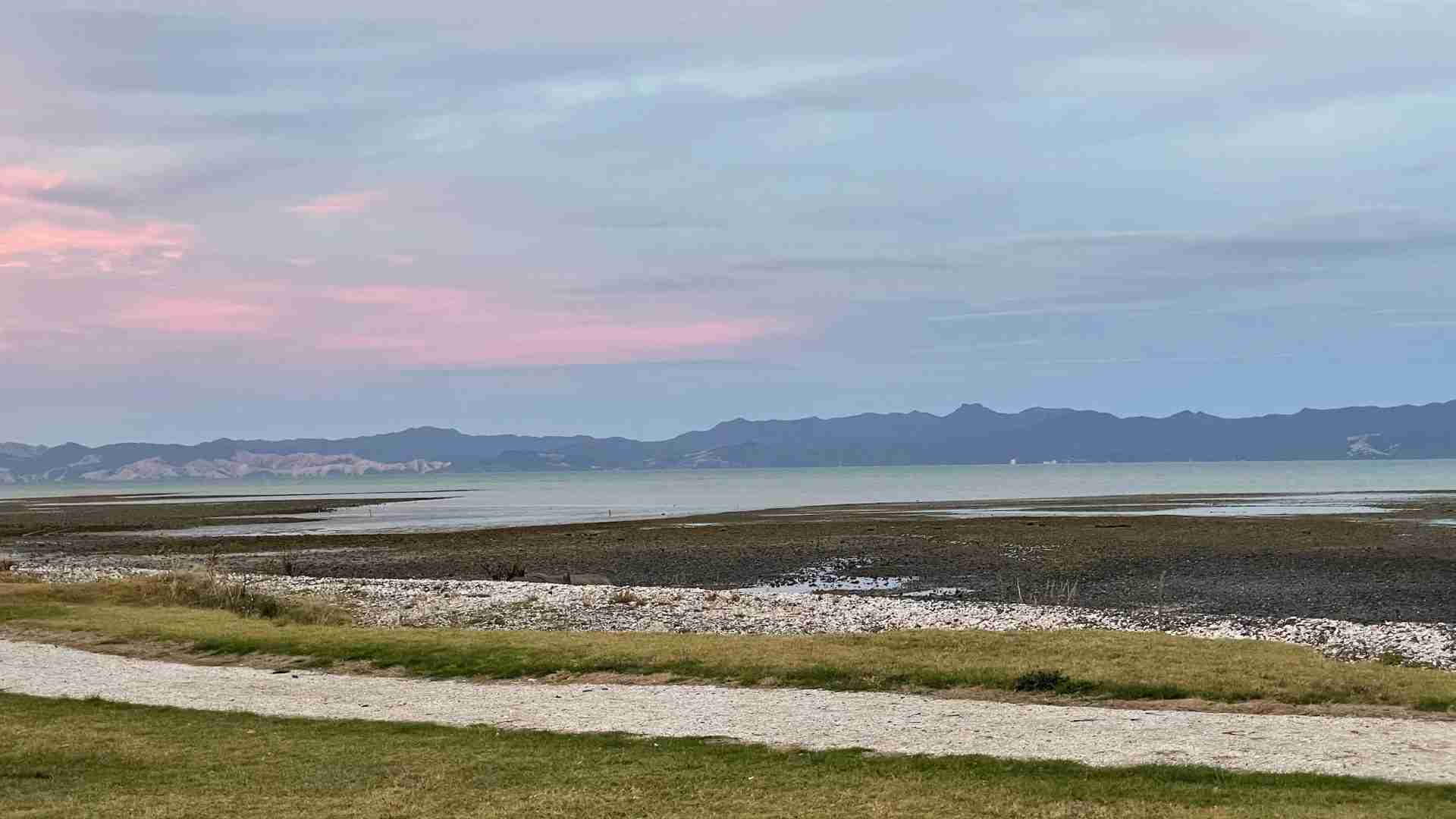
Stand on the seawall at Thames at low tide and look out across the Firth. What you see is a long flat sheet of brown water, mangroves crawling along the southern edge, and somewhere out there past the mussel farm floats, a seabed that used to be one of the richest pieces of marine real estate in the country.

A hundred and twenty years ago, the floor of the Firth of Thames and the inner Hauraki Gulf was carpeted with green-lipped mussel reefs. The best current estimate is that over 600 square kilometres of subtidal mussel beds covered the inner Gulf before the dredge fishery started in 1910, with dredging eventually scarring around 1,500 square kilometres of seabed before the fishery collapsed in 1965. L.J. Paul’s 2012 history of the dredge fishery for the then-Ministry of Fisheries lays out the trajectory in detail. Recent surveys can find only about 0.64 square kilometres of natural beds left. That is less than one tenth of one percent of what was once there.
This piece argues for two things. First, we should put the mussels back in the Firth. Second, we should phase bottom trawling out of the Hauraki Gulf over the next fifty years, starting now. Neither idea is radical. Both are achievable. Together they would give the Gulf the best chance it has had in over a century.
Why the mussels matter
A single adult green-lipped mussel filters somewhere between 250 and 350 litres of seawater a day. Multiply that across a restored bed of even a few square kilometres and you have the kind of natural water cleaning system the Firth has not had since before the First World War. Mussels strip out fine sediment and excess nutrients, the two pollutants that NIWA has been measuring climbing in the Firth for over twenty years. They build three-dimensional structure on what is currently a flat muddy floor, which gives juvenile snapper, crayfish, crabs and dozens of other species somewhere to hide and grow. They lock up carbon in their shells. They knock down wave energy before it reaches the shore.
We already know it can work
A 2012 NIWA and Leigh Marine Laboratory study found that adult mussels placed back on the Firth seabed survived and grew. The problem the wild beds have is not that mussels cannot live there. It is that not enough new baby mussels are settling and surviving to rebuild the beds on their own. That is a problem of supply, not of habitat, and supply is exactly the thing humans can fix. Since 2014 the Revive Our Gulf project has deployed more than 37 million mussels across test sites from Mahurangi to Ōkahu Bay to Kawau Bay. The science is no longer the bottleneck. The next step is scale, and the next place is the Firth.
Farmed mussels and wild beds do different jobs
Some will say we already have plenty of mussels in the Firth, because the farmed industry produces about 26,000 tonnes a year from these waters and employs hundreds of people. That is true and the industry should be protected and supported. But farmed lines and wild beds do different jobs. Farmed mussels hang in mid-water and are harvested before they reach the seabed. Wild beds sit on the floor of the sea, build reef structure, and stay there. You need both. In fact, the mussel farming industry is one of the strongest arguments for restoration, because it already produces the spat and the boats and the expertise a restoration programme needs.
The restoration plan
Set a target and put it in writing. A sub-target for the Firth of Thames of 50 square kilometres of restored mussel bed over twenty years would be ambitious but achievable. That is roughly three percent of what was originally there. Waikato Regional Council, Auckland Council, the Department of Conservation, Fisheries New Zealand and the Hauraki Gulf Forum should sign on jointly, with milestones at five and ten years.
Fund it like the infrastructure it is. The Gulf’s natural capital was valued at around $100 billion in the 2023 Hauraki Gulf Forum State of the Gulf report. A restoration programme that delivers measurable water quality improvement, fisheries enhancement and carbon storage is cheap by any normal infrastructure standard. Central government, regional councils, the mussel industry and philanthropic funders should pool funding into a single Firth of Thames Mussel Restoration Fund with multi-year certainty.
Use the volunteers already showing up. The Revive Our Gulf model, where divers, boaties, fishers, scientists and community groups work together on deployment days, exists and works. It should be expanded into the Firth with a permanent base at Thames or Kaiaua, where school groups, retirees, recreational fishers and Pūkorokoro Miranda Shorebird Centre volunteers can take part.
Fix the upstream pipe while you work on the downstream filter. There is no point pouring mussels into the Firth if the Waihou and Piako rivers keep dumping 185,000 tonnes of sediment a year on top of them. Riparian fencing, wetland reconstruction on the Hauraki Plains and sediment traps need to keep moving. Sustainable Coastlines and DairyNZ already have programmes here that need ongoing support.
Measure everything and publish it. The reason debates about the Gulf keep going in circles is that different sides quote different numbers. Set up a single open-access dashboard, run by NIWA or the University of Auckland, that publishes annual data on bed coverage, mussel survival, water clarity, nitrogen levels, oxygen levels, fish recruitment and bird counts. Let the public watch the Firth recover, or fail to recover, in real time.
Now the harder part, the trawl gear
Restoration alone will not be enough if the seabed keeps getting dragged.
Bottom trawling is still permitted across a substantial part of the outer Hauraki Gulf Marine Park, north of a line that runs from Kawau Island across to the Coromandel. The inner Gulf and the Firth itself have been closed to bottom trawl and Danish seine since the mid-1980s, which is good news for any restored beds inside those zones. But the outer Gulf, where snapper, john dory, tarakihi, red gurnard and trevally are still trawled, sits next door. Trawl gear scours the seabed, removes habitat structure, and according to the Parliamentary Commissioner for the Environment releases carbon that had been stored in seabed sediment.
The fair way to deal with this is not an overnight ban. People have legal quota, paid for under the Quota Management System, in some cases held for decades. Confiscating that overnight would be unjust, expensive in compensation, and politically impossible. It would also punish operators who have done nothing wrong under the law as it currently stands.
How to phase it out fairly
The fair way is a slow, signalled, bipartisan phase-out over fifty years.
That means Parliament should pass a cross-party resolution that bottom trawling will be progressively removed from the Hauraki Gulf Marine Park between now and 2076. A few percent of the currently trawled area should be closed each year, on a published schedule, starting with the areas adjacent to restored mussel beds and existing marine reserves. Quota holders should be given decades of advance notice, which is more than enough time to write down asset values, transition to alternative methods, and avoid investing in new gear that will not have a working life.
That last point matters. Banks and investors should know now that no new bottom trawl vessel built today should expect to be working in the Gulf in fifty years. That signal alone, if both major parties send it consistently, will shift capital decisions without anyone losing a cent of existing rights.
The alternatives already exist
Bottom longlining already takes about 12 percent of Gulf commercial catch and produces premium fish for export. Potting has reduced bycatch to under one percent in some ling fisheries, with almost no seabed contact. Purse seining catches the majority of Gulf commercial volume already, without touching the seabed. Precision Seafood Harvesting, the New Zealand-developed Modular Harvest System, was approved by Fisheries New Zealand for inshore use in 2019 for snapper, tarakihi, trevally, red gurnard and john dory. Juvenile fish and unwanted species escape alive in numbers conventional nets cannot match. The technology exists. It is legal. It just needs to scale, and a fifty-year phase-out gives the industry the runway to make that shift commercially.
Existing trawl quota holders should be supported through the transition. Capital grants for conversion to longlining, potting or Precision Seafood Harvesting should be available. Where boats are retired early, voluntary buyback at fair market value should be offered. Jobs in Coromandel, Leigh and Whitianga should be protected through the transition, because the goal is not to break the industry, it is to change how the industry catches fish.
Why slow steady change beats waiting for the perfect plan
Fifty years is a long time. Fifty square kilometres of restored mussel bed is a small fraction of what was lost. A few percent of trawl area closed each year sounds almost too gentle to matter. But every journey starts with a single step. The Firth did not become what it is today in one decision. It will not be restored in one decision either. What matters is that the direction is set, the first step is taken, and each year after that builds on the one before.
If we stall because the opposition to fast change is too strong, we do nothing. If we do nothing, then fifty years from now nothing will have changed, and the same arguments will still be running. Slow steady incremental change, signalled clearly and started immediately, gets us somewhere. Waiting for the perfect plan gets us another fifty years of decline.
We have spent twenty years arguing about whether to start. The science is settled. The legal framework is in place after the Hauraki Gulf / Tīkapa Moana Marine Protection Act came into force on 25 October 2025. The volunteers are showing up. The technology to fish differently exists. The only thing missing is the decision to begin.
A moderate proposal
This is a moderate proposal. It respects existing legal rights. It gives industry decades to adapt. It uses methods that are already legal and proven. It costs the taxpayer relatively little because most of the change happens through capital reallocation by the industry itself, responding to a clear long-term signal. It would deliver a Gulf in 2076 that is closer to what it was in 1900 than to what it is today.
So the proposal is on the table. Restore the mussel beds. Phase out bottom trawling slowly. Respect existing rights. Signal the direction now. Take the first step this year.
What do you think of this approach? Is fifty years too slow, about right, or too fast for the industry to absorb? Leave your thoughts in the comments below.
This article was written by AI, briefed to report the facts, hopefully without some of the bias people bring to the job 🙂
Leave a Reply