
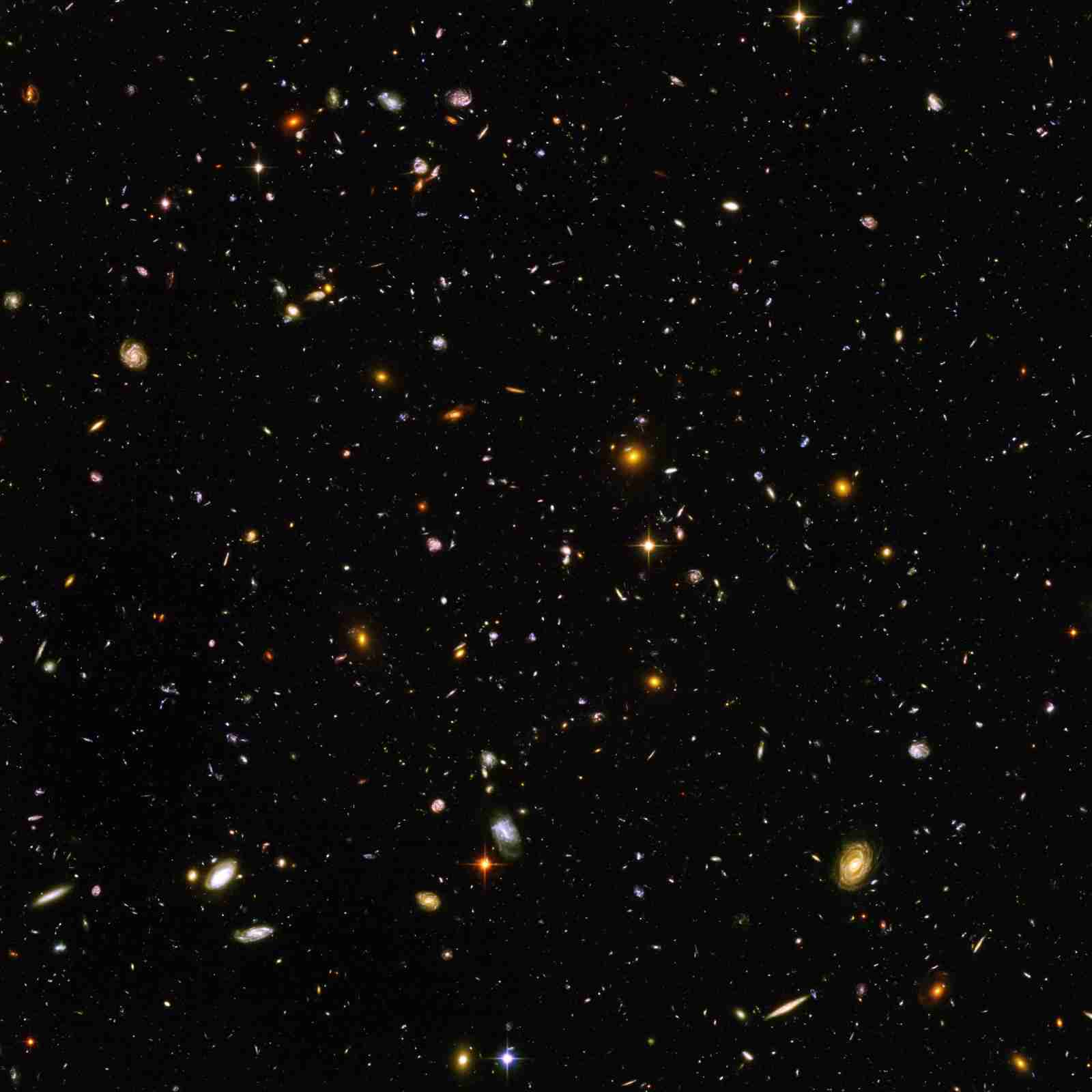
In the autumn of 1967, in a lecture theatre at the University of Texas, the most famous cosmologist in the world stood up to talk about the fate of the universe. His name was Allan Sandage. He had inherited Edwin Hubble’s seat at the Mount Wilson Observatory in California. He had spent two decades using the world’s largest telescopes to measure how the universe was expanding, and he was edging toward what he believed was the answer: the universe was closed, the expansion was slowing, and one day, far in the future, it would all collapse back in on itself.
A young woman in the audience put her hand up. She was twenty-six. She had a husband at the University of Texas at Dallas and an infant son she had adopted in New Zealand the year before. She was not yet Dr Tinsley — that came in December — but she was very nearly there. Her PhD thesis, submitted weeks earlier, ran to a kind of cosmology that almost no one else in the room had thought through properly: it argued that galaxies themselves were changing over cosmic time, growing dimmer as their stars aged, and that this fact alone meant the methods Sandage had been using to measure the universe were unreliable.

She told him so.
The exchange that followed has become a small piece of folklore in the history of cosmology. Sandage was not used to being challenged in public, certainly not by women, certainly not by graduate students. The argument lasted years. Beatrice Tinsley won it.
She did not, however, get to enjoy the victory for long. Within twelve years she would be a full professor of astronomy at Yale — the first woman to hold the position in the university’s history. Within fourteen years she would be dead, of melanoma, at forty.
This is the story of how a New Plymouth schoolgirl who decided at fourteen that she wanted to understand the universe became, by the time she died, the person most responsible for our modern understanding of how galaxies actually work. It is also a story about what that ambition cost her, and how badly her own country failed to notice what it had produced.
Chester to Christchurch to New Plymouth
Beatrice Muriel Hill was born on 27 January 1941 in Chester, in the north-west of England, prematurely, after an air raid. She was not expected to live. She was the middle of three daughters of Edward Owen Eustace Hill and Jean O’Hagan Morton.
The Hills were from upper-middle-class English Protestant stock, and they were also unusual. Both parents had become deeply involved in the Oxford Group — later called Moral Re-Armament — a charismatic interfaith movement founded by the American evangelist Frank Buchman, whose adherents tried to live by what they called the Four Absolutes: Absolute Love, Absolute Purity, Absolute Honesty and Absolute Unselfishness. The household Beatrice grew up in took the moral and metaphysical questions of life very seriously. Dinner-table conversation routinely covered the nature of God, the meaning of death and the structure of the universe.
After the war, in 1946, with rationing still in place and Edward unable to settle to a career in England, the family emigrated to New Zealand. They went first to Christchurch, where Edward was ordained as an Anglican curate and assigned to St Mary’s, Merivale. Beatrice, then five, was enrolled at the prep school attached to St Margaret’s College.
There is a small, devastating moment from this period that biographers have never quite let go of. The family had a nanny — a substitute mother for Beatrice from babyhood — who did not come with them when they emigrated. The little girl experienced the absence as what she later described, in her own words, as a black hole of grief. The nanny was eventually brought out from England, but a second separation in 1949 desolated Beatrice all over again. It was after that second loss, biographers note, that she drew up her first rigid daily timetable for living, with every waking hour purposefully filled. She was eight.
In 1948 the family moved to Southbridge, a small farming town near Lake Ellesmere, where Edward was vicar. In 1950 they moved again, to New Plymouth. Edward was the Anglican vicar at first; in 1953, against the run of expectation in a city where the incumbent had held the mayoralty since 1933, he stood for the position himself and won. He was Mayor of New Plymouth from 1953 to 1956. He hosted the Queen and the Duke of Edinburgh during the 1954 royal tour.
This is the family the New Plymouth Beatrice grew up in: visibly devout, publicly prominent, intellectually serious, and quietly demanding. The Hill girls were expected to do something with their lives.
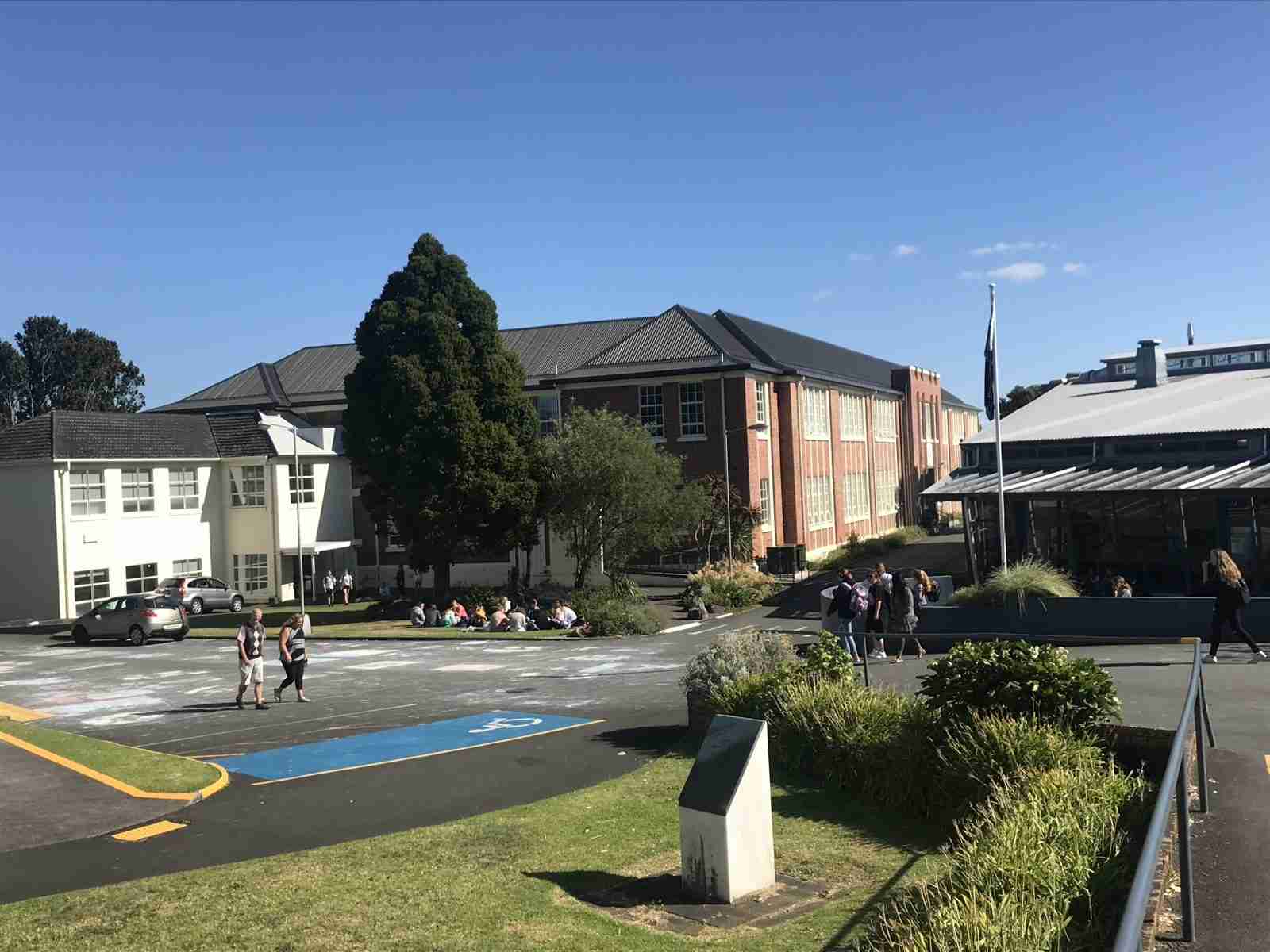
Beatrice attended New Plymouth Girls’ High School from 1953 to 1957. She topped her class in every subject every year. She played the piano and the violin to a serious standard — there was a real possibility for a while that she would become a professional violinist. She rode ponies. She swam. She read. The diary kept by the family suggested she was always by some margin the youngest in her class, having been pushed forward.
Two things mattered for what came next. The first was a book — Fred Hoyle’s The Nature of the Universe, published in 1950 and based on lectures Hoyle had given on BBC radio. Beatrice read it as a teenager. It seems to have been the moment in which she stopped wanting to be a violinist and started wanting to understand cosmology. The second was a quiet act of pastoral common sense by her headmistress, Annie Allum, who had wanted Beatrice to specialise in English. Beatrice insisted on mathematics, physics and chemistry. Allum arranged for her to take her senior mathematics at New Plymouth Boys’ High School, because the girls’ school did not offer it at the level Beatrice needed.
She was dux of the school in 1957. She was one of only ten students in the country that year to win a Junior University Scholarship. She was sixteen.
Canterbury
She enrolled at the University of Canterbury — then still called Canterbury University College — in 1958, in physics.
She was one of a tiny number of women in the maths and physics classes. She did the work in roughly half the time of her contemporaries. She picked up a Master’s degree in 1961, by which point she had already decided that her life’s work was going to be cosmology. There was a problem: Canterbury in 1961 had no one qualified to supervise a Master’s thesis on a cosmological topic, so she settled for solid-state physics instead.
She also met Brian Tinsley, a postgraduate physicist four years older than her, at the university’s Socratic Society. She had had one engagement already broken off at sixteen. She married Brian on 13 May 1961 at St Aidan’s Church in Miramar, Wellington. She was twenty.
This is one of the moments in her life where biographers — including Christine Cole Catley, who wrote the major Tinsley biography — have noted the gap between her intelligence and her self-knowledge. The marriage had been entered into, in part, because the social environment of New Zealand in 1961 did not really offer a young woman a viable model for being unmarried at twenty-five. They set up house in Christchurch. Both were postgraduate students. Beatrice did all the cooking, cleaning and shopping. She also taught science at Christchurch Girls’ High School, did short-term contract work in the Canterbury physics department, and tutored privately to make money.
In 1963, Brian was offered a research position at the Southwest Center for Advanced Studies in Dallas, Texas — a new institution that would later become the University of Texas at Dallas. They went. She had been assured, before they left, that her Canterbury scholarship would carry over and that she could pursue her PhD in Texas alongside him.
That turned out not to be true.
Dallas, and a 400-mile commute
Dallas in 1963 had no interest in giving Beatrice Tinsley a doctorate. The Southwest Center where Brian worked did not accept married women. The University of Texas at Dallas, when it opened, did not have an astronomy department. The wider Texas academic culture of the time was, as historians have politely put it since, frankly hostile to women trying to do serious science.
She spent a year searching. In 1964 she enrolled as one of the first graduate students in the recently established Department of Astronomy at the University of Texas at Austin — about 400 kilometres south of Dallas by road. She commuted weekly. She spent two or three days in Austin each week and the rest in Dallas. The drive was long, the work was relentless, and she did the entire PhD programme in two years.
She received marks of 99 and 100 percent on her qualifying exams. She was the first student in the department’s history to score above 80 percent on every required component. The supervisor of her thesis, Rainer Sachs, described the dissertation as extraordinary and profound.
It was. It is, in retrospect, one of the most influential PhDs ever submitted in twentieth-century astrophysics — a piece of work that, almost alone, founded the modern field of galactic evolution.
The argument Tinsley made was, at one level, very simple. Cosmologists in the 1960s were measuring distances to far-away galaxies by treating galaxies of a given type — spiral, elliptical, lenticular — as standard candles. The assumption was that if you found, say, an elliptical galaxy, you knew roughly how bright it intrinsically was; therefore you could tell how far away it was by how dim it appeared from Earth. The whole edifice of measuring the rate of cosmic expansion, and from that the future of the universe, depended on this assumption.
Tinsley argued that the assumption was wrong. Galaxies, she said, were not static. They were made of stars, and stars were born, lived and died. The total light coming out of a galaxy depended on which stars were in it at any given moment — how many young hot blue stars, how many older dim red ones, how the chemistry of the interstellar gas had changed as generations of stars came and went. A galaxy seen as it was billions of years ago was not the same galaxy as one seen now. Its colour, its luminosity, its spectrum had all evolved. To use a distant galaxy as a standard candle without correcting for that evolution was to mismeasure the universe.
To prove the point, she did something that almost no one had done before. She built a computer model of a galaxy. Computers in 1965 were not what they are now. Tinsley’s models, written in the early languages of Texas mainframes, took the available stellar evolution theory — how stars of different masses age — and synthesised the resulting light output of a population of stars over time. She then took those modelled galaxies and asked what they should look like, photometrically, at different ages.
Slide the age forward, then switch between single starburst and continuous formation. The shift in colour and brightness is the heart of Tinsley’s argument with Sandage: a galaxy is not a static standard candle, and treating it as one mismeasures the universe.
Simplified after Tinsley’s thesis-era models. 5,000 stars are sampled from a Salpeter initial mass function (slope −2.35) over 0.1–60 solar masses. Main-sequence lifetimes scale as M−2.5, luminosity as M3.5, surface temperature as M0.55.
In a starburst, all stars are born at t = 0. The most massive (hot, blue) stars run out of hydrogen first — in millions of years — while low-mass red stars persist for tens of billions. The integrated light reddens and dims as the population ages. In continuous formation, new stars keep being born from gas, so the blue light is constantly replenished and the galaxy stays bluer.
Tinsley’s actual 1968 models tracked full stellar evolutionary tracks and the chemical enrichment of the interstellar medium in much greater detail. This is a teaching simplification of the qualitative result.
The answer was that they should look quite different. Older galaxies should be redder and dimmer than younger ones. The corrections were substantial — large enough to change which cosmological model the data favoured.
Her thesis was titled Evolution of galaxies and its significance for cosmology. She submitted it in late 1966 and passed her oral exam in December. By then she had also adopted, with Brian, a baby boy named Alan, brought back from New Zealand. She had written most of the thesis with an infant in the house.
She was twenty-five years old.
The argument with Sandage
In 1967 Beatrice Tinsley took her PhD work to the world.
The first major presentation was at a cosmology conference in New York, where she met James Gunn, a young Caltech astronomer who would become her closest scientific collaborator for the next fourteen years and, eventually, her lover. The second important moment came when Allan Sandage came to give a talk at the University of Texas.
Sandage in 1967 was, on any objective measure, the most important observational cosmologist in the world. He had been Hubble’s protégé. He had access to the great telescopes at Mount Wilson and Palomar. He had spent his career trying to measure two numbers — the Hubble constant, which described how fast the universe was expanding, and the deceleration parameter, which described how that expansion was changing. From those two numbers, in principle, you could determine whether the universe was open (and would expand forever) or closed (and would eventually collapse back).
Sandage’s data, by 1967, suggested the universe was closed. Tinsley, sitting in the audience as a freshly-minted PhD, stood up and told him that his data did not show what he thought it showed — because he had not corrected for galactic evolution. The galaxies he was treating as standard candles were not standard. They were dimmer, in the past, than he was assuming. Once the evolutionary correction was applied, his case for a closed universe largely dissolved.
Sandage, by all accounts, was not pleased. Tinsley was right.
The argument played out over years rather than minutes. In 1974, Tinsley co-authored, with J. Richard Gott III, James Gunn and David Schramm, a paper in the Astrophysical Journal called An Unbound Universe? The paper synthesised four independent lines of evidence — galactic evolution corrections, deuterium abundances, the dynamics of galaxy clusters, and the ages of the oldest stars — and argued that all of them pointed the same way: the universe did not have enough mass in it to halt its own expansion. It was open. It would expand forever.
The paper’s tone was pointed. Tinsley wrote most of it. Gunn later said she was the glue that held the whole collaboration together. The paper opened with an epigraph from Lucretius, the Roman poet of the unbounded cosmos. The implicit message, to anyone in the field, was that the orthodoxy Sandage and his school had spent two decades constructing was wrong.
Modern cosmology has since complicated all of this. We now know — from observations Tinsley did not live to see — that the universe is not just expanding but accelerating, driven by what we now call dark energy. The closed-universe models Sandage favoured are not the universe we live in. The picture Tinsley argued for in 1974 — a universe that would keep expanding — turned out to be the right one, even if the underlying physics was stranger than anyone in the room in 1974 had imagined.
A career, and no job to put it in
Through the late 1960s and early 1970s, while she was doing this work, Beatrice Tinsley had no real academic position.
In 1968 she and Brian adopted a baby girl, Teresa Jean. Beatrice now had two small children and a husband whose career was advancing on a normal academic track. Her own career was not. She was, in her own phrase from a letter to her father, kept by the University of Texas at Dallas at the nearest possible level to nothing. She published. She corresponded. She visited Caltech for short stints. She held a six-month research position at Lick Observatory in California. She was awarded the Annie Jump Cannon Award by the American Astronomical Society in 1974, for outstanding research by a postdoctoral woman astronomer. She was, by then, one of the most cited theoretical astrophysicists of her generation. She still did not have a job.
In 1973, the University of Texas at Dallas finally invited her to design an astronomy programme for the institution. She did the work. When the position of department head was advertised, she applied. The university did not even reply.
What she had to weigh, by 1974, was a kind of bitter arithmetic. She could remain in Dallas, in a marriage that had become emotionally distant, doing first-rate science from the wrong end of the academic system, raising her two children. Or she could go elsewhere — and elsewhere almost certainly meant the United States’ East Coast, where the major astronomy departments were — and accept that going meant leaving the children behind.
There was a real and ugly social context to that choice. American academia in 1974 did not give jobs to women who turned up with two small children and a husband three days’ drive away. It gave jobs to women who had freed themselves of those obligations.
Yale, in late 1974, offered her an associate professorship. She accepted.
She left Dallas on Christmas Day 1974. By her own account, the timing was deliberate: the children would be distracted by their presents, surrounded by ribbons and wrapping paper, and would be less hurt by her departure than on any ordinary day. Cole Catley’s biography, with characteristic care, points out that this was a piece of self-protective reasoning rather than a piece of actual psychology. The children remembered the Christmas Day for the rest of their lives.
Brian Tinsley, when he understood she meant to leave permanently, threatened to fight for sole custody. Beatrice declined to contest it. She believed a long custody battle would be worse for the children than the loss of her presence. She gave them up.
Her son Alan was eight. Her daughter Teresa was six.
Yale, and the most productive five years of her life
She arrived at Yale in 1975 by way of a six-month posting at Lick Observatory and a short stint at Caltech with Gunn. Her position at Yale was originally Associate Professor of Astronomy. On 1 July 1978 she was promoted to full Professor — the first woman in the history of the university’s astronomy department to hold the position.
The Yale years were the most productive of her career.
She organised, with her colleague Richard Larson, the Yale International Conference on the Evolution of Galaxies and Stellar Populations in May 1977. Almost every leading galaxy theorist and observer in the world attended. James Gunn later described it as the most important galaxy conference in the history of the subject. The published proceedings — edited by Tinsley and Larson — became a standard reference for a generation of astronomers.
She wrote, by herself or with collaborators, more than a hundred papers in fourteen years. Many of them are still cited. Her synthesising paper Evolution of the stars and gas in galaxies, written with Larson, became one of the foundational references for an entire field. Her models of star formation rates, of chemical evolution, of the colour-magnitude evolution of galaxies, became the basis for almost all subsequent work on what now gets called galactic archaeology — the science of reading a galaxy’s history out of the light it sends us.
She taught. She was, by every account from her students, an outstanding teacher: patient, demanding, generous, completely unintimidating about her own brilliance. She mentored women coming into astronomy at a time when there were almost none. She played chamber music. She sat on Yale committees, where she argued, sharply and often, for women’s positions inside the university.
In a letter to her father — preserved among the correspondence that would later become the basis for two biographies and a Radio New Zealand series — she wrote that her Yale position had given her a sense of hope and power over the future that had escaped her for years.
She was thirty-seven.
The diagnosis
In early 1978, in the same year she was made full professor, Beatrice Tinsley noticed a lump on her left leg. The diagnosis came back as melanoma. The cancer had begun in a mole.
She had surgery. Her doctors told her, quietly, that the operation was not going to be enough — that all they could really do was give her radiotherapy to slow the spread. She continued to teach. She continued to publish. She continued to travel to conferences. She continued to work on the models.
In 1979, Brian Tinsley remarried, and informed Beatrice that he could no longer manage their eleven-year-old daughter Teresa. Teresa was put on a plane to New Haven. Beatrice — by now suffering severely from the side-effects of cancer treatment, working full-time at Yale, and with rapidly diminishing physical strength — became a single mother again, to a child she had not lived with for five years. Her colleague Richard Larson moved into the apartment to help.
Teresa, now an adult, has spoken publicly about that period since. She remembered playing in the corridors of the Yale astronomy department after school. She remembered her mother helping with her homework in the Yale Infirmary. She also remembered, in her own words quoted in the New York Times obituary the paper finally got around to publishing in 2018, that she felt her mother had been given an ultimatum that was, in her view, unfair: choose family or career.
By November 1980 the cancer had spread to Beatrice’s brain. She suffered partial paralysis. Her right hand was affected, so she taught herself to write with her left.
She kept publishing. Her last scientific paper was submitted to the Astrophysical Journal on 13 March 1981. It was published, posthumously, in November 1981, without revisions. Almost nothing in the literature of academic astronomy is sent to the journal in completed form ten days before its author’s death.
Beatrice Tinsley died on 23 March 1981, at the Yale Infirmary, of metastatic melanoma. She was forty.
Near the end, she wrote a poem. It contains the line that her pen would suddenly move no more.
Her ashes were buried at Grove Street Cemetery in New Haven, the small burial ground surrounded by the Yale campus.
The slow recognition
Beatrice Tinsley’s posthumous fame has come in fragments, and from a long way away.
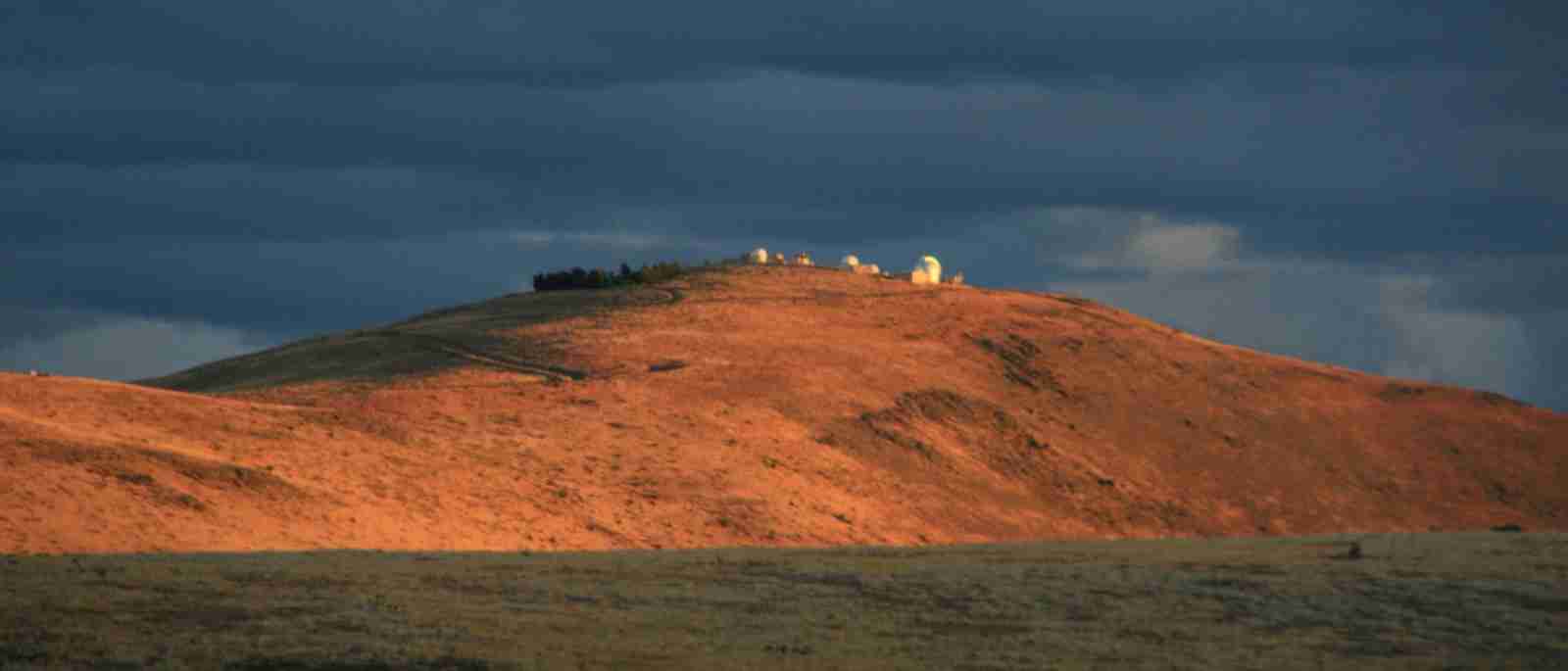
In 1981, the year of her death, an asteroid was discovered by Alan Gilmore and Pamela Kilmartin at the Mount John University Observatory near Tekapo. It was assigned the catalogue number 3087 and subsequently named 3087 Beatrice Tinsley in her honour. It was the first major piece of New Zealand recognition.
In 1986, the American Astronomical Society established the Beatrice M. Tinsley Prize, awarded for outstanding creative or innovative contributions to astronomy or astrophysics. It is one of the few major American scientific prizes named for a woman scientist. It is awarded without restriction on the recipient’s nationality or country of residence.
The University of Texas at Austin — the institution that had given her the PhD in two years and then, for ten years afterwards, declined to give her a job — endowed the Beatrice M. Tinsley Centennial Visiting Professorship in 1989, and added the Tinsley Scholars programme for younger researchers in 2007.
In 2005, the Circa Theatre in Wellington produced Bright Star, a play based on her life. Christine Cole Catley’s full-length biography, of the same name, was published in 2006 — drawing extensively on the letters Tinsley had written home to her father over more than two decades. Edward Hill himself had published a smaller, more personal account, My Daughter Beatrice, in 1986.

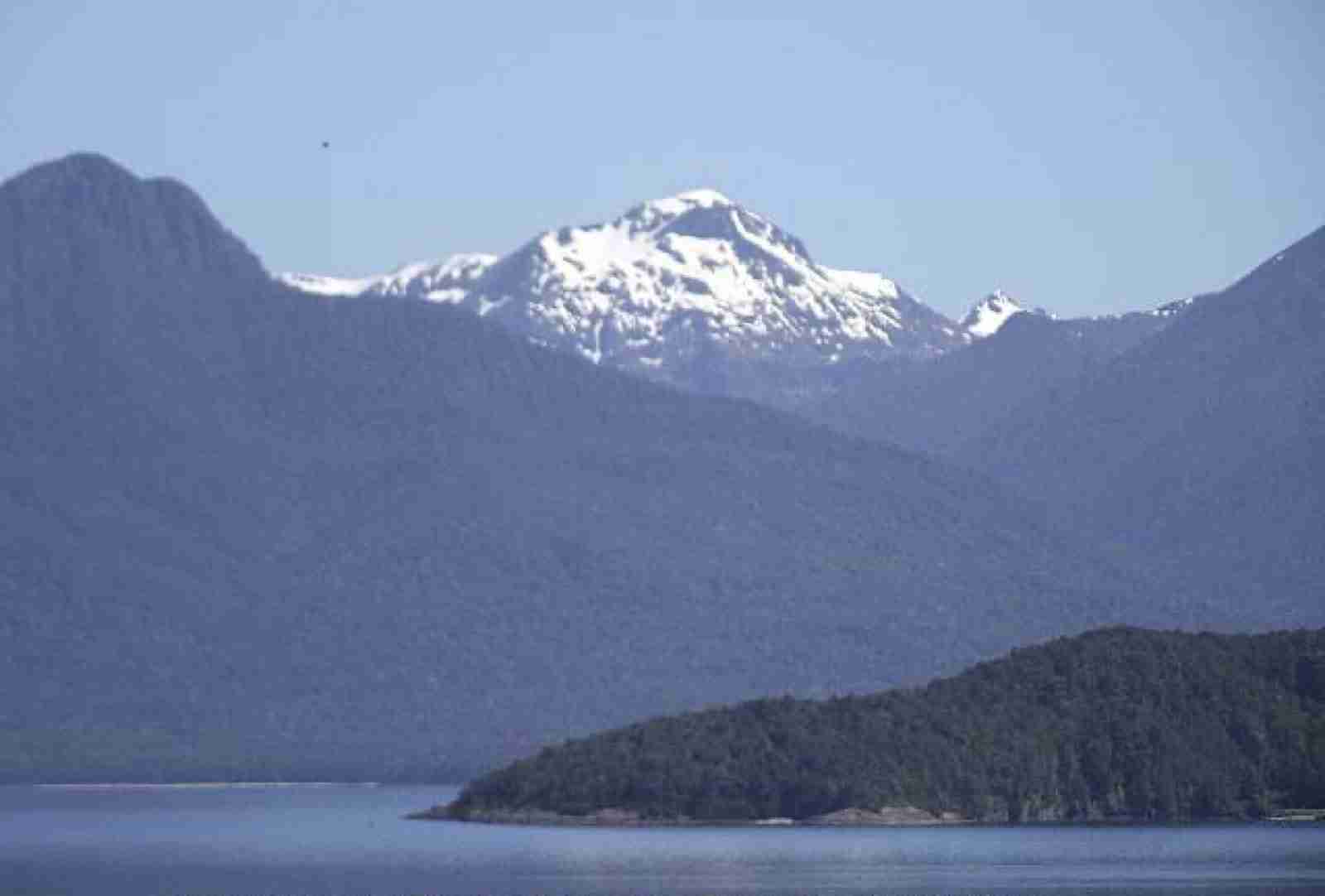
In 2009 the University of Canterbury formed the Beatrice Tinsley Institute for New Zealand Astronomy and Astrophysics. In December 2010, the New Zealand Geographic Board officially named a 1,537-metre peak in the Kepler Mountains in Fiordland as Mount Tinsley — the Kepler range itself being named for the German astronomer who first worked out that planetary orbits were ellipses.
In 2012, the Royal Astronomical Society of New Zealand established the Beatrice Hill Tinsley Lecture Series. In 2016, on what would have been her 75th birthday, Google produced a Doodle in her honour. In the same year, the New Zealand Association of Scientists renamed its Research Medal the Hill Tinsley Medal. In 2018, the New York Times finally published her obituary as part of its Overlooked project, which catches up on the deaths of remarkable people the paper had not noticed at the time. In 2019 she was on a New Zealand postage stamp in the Space Pioneers series, and the new science staff and postgraduate building at the University of Canterbury — built using Pres-Lam timber technology developed at the university — was opened in her name.
The Yale Society of Physics Students started an annual Tinsley prize lecture in 2018. Beatrice Tinsley Crescent, a small street in Rosedale on Auckland’s North Shore, was named for her at some point in the early 2010s.
The recognitions are real. They are also, almost without exception, posthumous, scattered, and considerably smaller than the recognitions accorded to her male contemporaries who did less and lived longer.
What she changed
The hardest thing to convey about Beatrice Tinsley, in a profile of this length, is the actual shape of her contribution to science.
Most popular accounts of her — including, frustratingly, much of the Cole Catley biography — settle on what she was like rather than what she did. The story tends to be about the woman who left her children, the woman who died young, the woman the universe was unkind to. Those stories are not wrong. They are, in their way, the easier stories to tell.
The harder story is this. Before Tinsley, professional astronomy treated galaxies as essentially static objects. They were, for cosmological purposes, fixed bright spots whose intrinsic luminosity could be used as a standard candle to measure cosmic distance. The light from a galaxy ten billion light-years away was the same kind of light, modulo redshift, as the light from a similar galaxy a few hundred million light-years away.
After Tinsley, astronomy treated galaxies as evolving systems whose light output changes with time — because the stars inside them age, die, and are replaced by new generations born from interstellar gas that has itself been chemically enriched by the deaths of the old. This is now uncontroversial. It is in undergraduate textbooks. Every modern measurement of cosmic distances using galaxies as standard candles applies an evolutionary correction that descends, in lineage, from Tinsley’s PhD.
It is hard to overstate how completely she founded the field. The current shape of galactic evolution as a discipline — stellar population synthesis, the modelling of star formation histories, the integration of observational and theoretical data into coherent galactic timelines — runs in a straight line from her thesis. James Gunn, who eventually shared the Crafoord Prize for related work, has said publicly that Tinsley’s death was the most consequential personal loss the field of cosmology suffered in the 1980s.
If she had lived another twenty years, she would almost certainly have shared a Nobel Prize with Saul Perlmutter, Brian Schmidt and Adam Riess for the discovery of cosmic acceleration in 1998. The corrections she had built into the theory of galaxy evolution were, by the late 1990s, exactly what was needed to interpret the supernova data that won them the prize. The Nobel committee does not award posthumous prizes.
She missed it by seventeen years.
What she means
Beatrice Tinsley is, in the end, an awkward kind of New Zealand hero.
She was not born here. Her family of origin was English Anglican; her education was in Christchurch and New Plymouth and finished in a country in which she lived only as a child and a teenager. She did her important work in Texas and Connecticut. She is buried in New Haven. The institutions that house her papers, give her prizes and run her conferences are American.
And yet her formation was unmistakably New Zealand. The Provincial confidence of New Plymouth Girls’ High School in the early 1950s, where the headmistress arranged for a girl to take maths at the boys’ school because the girls’ school could not stretch to it. The University of Canterbury at the end of the 1950s, where a sixteen-year-old turned up in physics and topped every class. The cluster of New Zealand astronomers — Alan Gilmore and Pamela Kilmartin, John Hearnshaw, the Mount John community at Tekapo — who quietly named an asteroid for her the year she died, while the rest of the country still mostly did not know who she was.
She wrote home to her father, in letters that went on for decades, in a kind of rolling personal newspaper of her American life. Those letters are now in the Alexander Turnbull Library in Wellington. They are the basis for everything we know about her interior life. Without them — without the simple Anglican-vicar habit of keeping correspondence — her story would be untellable.
There is a comfortable way to remember her, and an uncomfortable way. The comfortable way is to make her a tragedy: the brilliant young woman the universe took too soon. The uncomfortable way is to face the fact that the sexism she ran into in Texas in the late 1960s is the reason the choice she had to make in 1974 looked the way it did, and that the choice she made — to leave her children — is one she would almost certainly not have had to make if she had been a man with the same talent.
She was as gifted as any New Zealand scientist who has ever lived. The country that produced Ernest Rutherford produced Beatrice Tinsley in the same century. We made an enormous public fuss about Rutherford. We barely noticed Tinsley until she had been dead for decades.
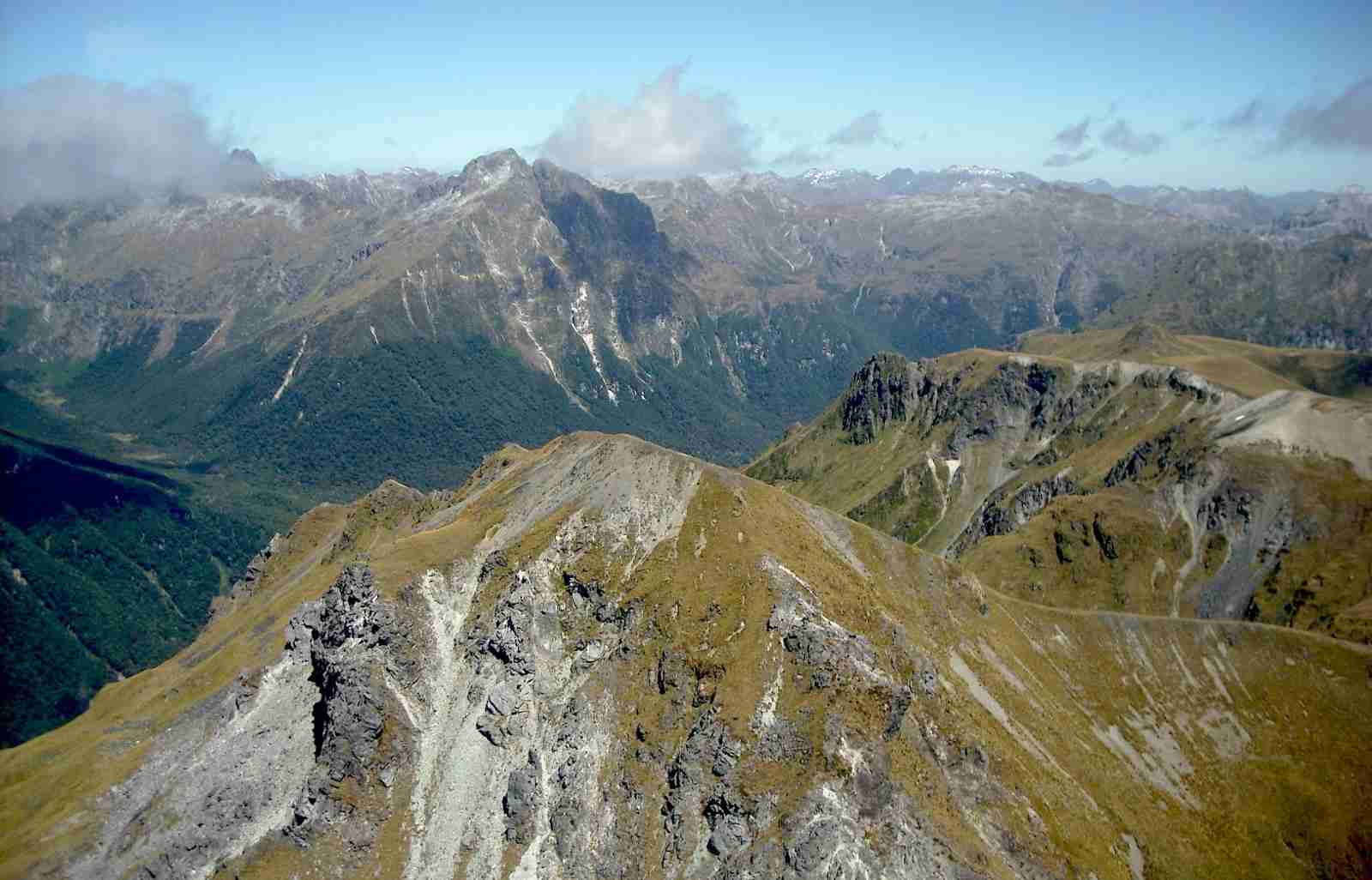
The mountain in Fiordland is a start. The asteroid is a start. The building at Canterbury is a start. The 2018 New York Times obituary is a start, if a late one.
The question is whether forty-five years on from her death — long enough for the stars she modelled to have moved appreciably — we are now ready to see her plainly. Not as a tragedy. As what she actually was: one of the most creative theoretical astrophysicists of the twentieth century, who happened to come out of a Taranaki vicarage and a Canterbury physics department, and who saw the universe more clearly than almost anyone of her generation.
She did not waste a minute of her life. The least the rest of us can do is occasionally pay attention.
Sources and further reading
- Te Ara — Tinsley, Beatrice Muriel (Dictionary of New Zealand Biography)
- NZ History — Beatrice Tinsley
- Christine Cole Catley, Bright Star: Beatrice Hill Tinsley, Astronomer (Cape Catley, 2006)
- Edward Hill, My Daughter Beatrice: A Personal Memoir of Dr. Beatrice Tinsley, Astronomer (American Physical Society, 1986)
- Tinsley and Larson (eds.), The Evolution of Galaxies and Stellar Populations (Yale, 1977)
- American Astronomical Society — Beatrice M. Tinsley Prize
- Beatrice Tinsley Institute for NZ Astronomy and Astrophysics
- Tinsley correspondence — Alexander Turnbull Library, Wellington
Have you been touched by Beatrice Tinsley’s work, or by her story? Drop a comment below — we read every one.
This article was written by AI, briefed to report the facts, hopefully without some of the bias people bring to the job 🙂
Leave a Reply